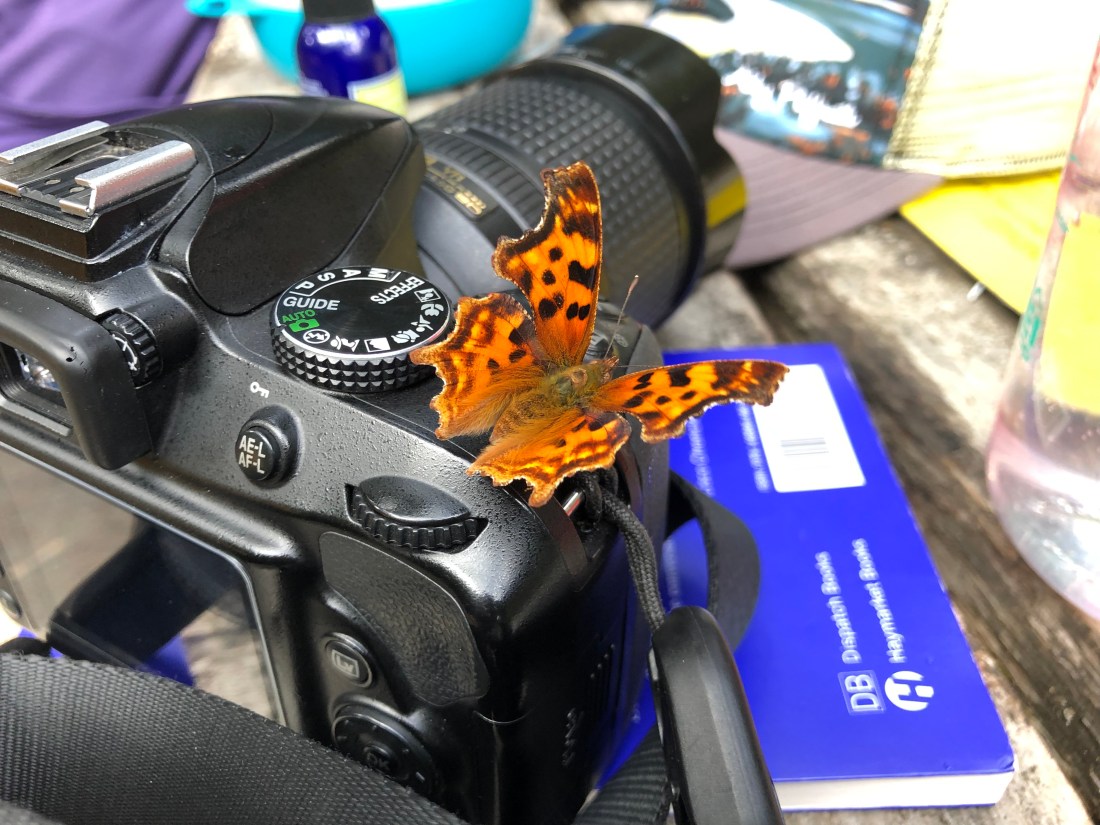
Cottonwood Seeds en Route: IV. Isabella Dudosa

Each section is based on the Oxford English Dictionary’s word of the day from April, 2020.

This is the fourth entry in Cottonwood Seeds en Route. It is a continuation of Part III: Suri Dihan.

I. Ombrogenous, n.

It is often stated as a fact that a person needs to feel some sort of pain in order to grow— we can see this literally when someone’s joints ache as their arms or legs grow longer. I am not sure how plausible this claim is though— too much stress can crush a sapling or snap a flower’s stem, for instance.

Humans are naturally social creatures— there are mountains of research and meta-research supporting this— so time during this Stay-at-Home order from Gov. Inslee is sure to cause a lot of stress on a lot of people.

That is why I decided to start skyping my friends. To help alleviate that stress from them. Their schedules are all conflicting though— Violet barely has internet, Crystal’s always watching her sister, just like Suri and their siblings, and Nadine’s always nose-deep in some Austen novel or at work— so there’s never really a time for us all to talk face-to-face.

So, I just talk to whoever I can, a different person each day on a cycle— I need time to work on my own studies, you know. And my homework too.

II. Chicken Scratch, n. and adj.

Yes, I am aware that Zoom lessons are recorded, and I can go back to them whenever, but who has the time for that? I want to get as much information written down as possible, so I can get whatever random assignment the teacher’s added to their Schoology page done.

I scribble notes down as quickly as I can, as much precise wording as I can. I become a stenographer— no, a machine recording every syllable that travels through our ethernet cable.

The feeling of accomplishment washes over me at the end of Ms. Hendrix’s lecture. That is, until I look back at my notes during the quiz she posted for review, and my notes look like a pile of pine needles on the sidewalk.

III. Daddock, n.

After wrangling Alejandro to sit at a table and practice subtraction for 30 minutes, I realize I need air. I put on my jacket, a scarf around my mouth— per CDC guidelines— and go on a walk.

The first step outside is like the first time you sip cold water after not drinking any for a long time— I don’t realize it until I feel the cold spread through my ribs.

I walk to the end of the culdesac and sit on the curb— acing social distancing the whole time, by the way. There’s a nurse log behind the fence that abruptly ends the road. I sit there. Just sit there watching the moss inch in the wind, sparkles of light from fresh rain blink in the sun, mushrooms stretch their necks like giraffes through the moss canopy.

Everything’s quiet now. I feel my ribs expand as I take a deep breath. Can’t remember the last time I did that.

IV. Ruly, adj.

“Morning, Violet!” I say, holding my phone to my ear. It feels so weird using a phone… as a phone.

“Good morning,” she responds. I can hear the exhaustion in her voice.

“You doing okay? Still no internet?”

“Not yet, no. My mom applied for that free internet offer from Comcast, but they’re booked out for over a month. It’s alright though. Nadine dropped off a couple books on our door for me to read—“ Rusting of plastic fills the pause.”Do you think she reads anything from this century?”

“I think it depends on how you define ‘century.’”

She chuckles, “Within the lifespan of a currently-living person?”

“Results are inconclusive; further research needed.”

We laugh. Hers sounds strained. “It’s just stressful, you know? At first it was like being a tree in a rainstorm, but as soon as school got closed, it’s like the sun went out. I don’t really know what’s happening. The calls from the principal help, I guess?”

“I heard pretty much every phone company is giving their customers unlimited data. Can’t you use that to get the news?”

“Maybe, but Crys is constantly texting me the latest panic-news. She’s like my personal Associated Press. Her takes seem pretty extreme though. I mean, I went on a walk yesterday, and everyone was wearing masks. Like that would help anything.”

“The CDC said everyone should wear masks, Violet. Were you not wearing a mask?”

“No. A random patch of cloth isn’t going to prevent a virus. Plus, if you’re walking far away from people, it’s unnecessary!”

“But it wouldn’t hurt! Shouldn’t people do everything possible to prevent the disease?”

“Yeah, I guess. I just don’t want stuff on my face. It feels weird. It’s weird that stuff feels normal on my arms and stuff but not my face.”

“I know. It was too warm for scarves, but I wore one yesterday anyway. Sometimes you need to make sacrifices for the greater good.”

V. Broigus, adj. and n.

Sunday morning, I wake up hearing frustrated groans from the dining room, sporadic clacking. It all builds up to my mom yelling “Isabella! Get out here!”

I sigh, roll out of bed. Everything feels half speed, like there’s rust in my joints. I drag my feet out of my bedroom, the light of hallway too bright.

“Isabella! I need your help!”

I enter the dining room, see her sitting in front of her old laptop, her glasses down to the tip of her nose. “Yes, Mom. Good morning.”

“Isabella. I can’t get this to work.”

I walk around to see her screen. “Get what to work?”

“Church. It’s online, and I can’t find it.”

“The livestream? Is that what you mean? Did you get a link for it?”

“I don’t know! They said on Facebook they were holding mass online, and I can’t find it.”

“Alright.” I lean over, scroll on the trackpad. “Most Catholics don’t go to mass every Sunday, you know. It’s okay to miss it this one time if you can’t figure it out.”

Her eyes go wide. “Isabella! What are you saying?! It’s Palm Sunday! The Dudosas do not miss mass! Especially during such a holy time!”

“Okay. Okay.” Her prideful fury— while technically a sin, but I’m not going to bring that up to her— is terrifying. “The link is right here, under the status.” I click on it, wait for the stream to load.

The priest’s voice bursts out of the laptop. Mom gasps in delight. “Thank you so much, Isabella! You’re a blessing.”

“No problem, Mom,” I say, turning back toward my room. Behind me, I hear her sip her coffee and the priest read from Matthew.

VI. Geodesy, n.

Every day, around lunch, I go to Johns Hopkins’s COVID-19 map and update a spreadsheet I’ve been maintaining for a couple weeks. Call it biased, but I track each county in Washington. I also check on the major cities in each state though, as well as some other countries.

I track the number of confirmed cases, deaths. I also check any news on what governors or national governments implement— always find an additional source to corroborate. I then go back and update graphs I’ve made. They’re not as good as the professional ones, obviously, but I’m getting better. Maybe I’ll spend spring break trying to get better with pivot tables.

It takes a while, I know, but it’s become meditative. There’s a block of time in the afternoon where I get some quiet, find patterns and logic in the waves of chaos. When things break down into numbers, and I can connect those numbers to actions of people, it gives the haze shape.

VII. Wordsworthiana, n.

On the last day before the closure, in the frantic dash through 30-minute classes, most teachers dumped packets, talked about future units or plans that could be. They talked about due dates, projects being delayed. I remember the strain in their eyes, their sclerae bold around their irises, their hair disheveled.

That is, except for Ms. Hendrix. She sat on her stool in the front of the classroom, her eyes calm, her braids neatly draped over her shoulder. She talked about uncertainty, coping with the feeling of not knowing what the next day or week would bring. I could hear old sadness in her voice.

She read us a poem before class ended. I can’t remember the name or the poet. But, I remember the feeling of comfort, of being an element in Earth’s circuit inside an intricate galaxy. There was a warmth when her voiced lilted as she said the word ‘daffodils.’

VIII. Simon Pure, n. and adj.

Every morning, my mom walks into the kitchen to start the coffeemaker. As she waits for it to brew, she says good morning to Jesus on the crucifix above the sink, hanging between the two window panes. She grabs a copy of the Bible from the shelf with the cookbooks, and thumbs through a few pages until her carafe is full.

Every afternoon, my mom reads the Bible to Alejandro, just like she did to me when I was his age. She reads in both English and Spanish to help him gain fluency in both languages, but to also really drive home Job’s hardship.

Every night, right before bed, she gathers all of us up to pray the Rosary. Alejandro doesn’t quite have each prayer memorized yet, so she says them out loud. Each prayer is punctuated by the quiet clicks of beads moving through fingers, dangling exhausted from our hands.

IX. Arbitrium, n.

Things are difficult for everyone now that, a couple days ago, Governor Inslee announced schools would be online for the rest of the school year. Likewise, everyone deals with their grief and trauma differently. It’s hard to reserve judgement, however, when I see so many people go to the park by my neighborhood.

I keep seeing the numbers of deaths rise every day. Maybe this meditation tactic is starting to wear thin. I feel a shout grow in my chest, but I swallow it, keep it down.

Don’t want to be like my mom, who never hides her judgement. She’s upfront with every person she sees, wether it’s my cousin’s quinces or the produce section of Fred Meyer. It’s mortifying.

X. Armisonous, adj.

There are several signs when my mom is overwhelmed. First, she whispers a Hail Mary under her breath after she steps away from everyone else, the crucifix on her necklace gripped in her fist.

If it gets worse, I hear her Bible’s spine forcefully land on the dining room table, followed by its covers flapping open and the frantic turning of pages as she looks for the right passage. She reads for a couple minutes. Sometimes, she reads it out loud (that’s when we know things are REALLY bad).

She then closes her eyes, takes a few deep breaths, then gets back to the tasks she thinks need to get done.

Religion is a common coping mechanism when someone feels chaos and tragedy gnawing on their ankles. It’s possible God is the generator that kicks in during a power outage. It’s also possible that the act of stopping to breathe is sufficient on its own. But, if God helps get her there, what’s the difference?

XI. Sumi-E, n.

While waiting for my bread to toast this morning, the last Saturday of spring break (according to the Star Wars calendar in the kitchen my dad marks to keep track of time), I look into the hallway, see the section of wall filled with family portraits. My mom insists on subjecting every child to a photoshoot at JC Penny on their fifth birthday.

My eyes stop on Alejandro’s portrait, taken back in September, a few weeks after he started kindergarten. My brother’s hair is neat, the crease straight above his right ear. There’s a teal button-up under a white sweater vest, a red bowtie in front of the top button, fastened tight. He’s smiling.

That picture isn’t really Alejandro though. He can’t sit still for longer than ten seconds. His hair is always tossed, his face covered with candy and souvenirs from that day’s adventure. The picture is an imitation that simply doesn’t capture him— it tells a story that’s easier to understand.

XII. Locuplete, adj.

On Sunday, my mom wakes all of us up early. Despite sleepy protests, she insists we dress up for Easter Mass. Dresses, ties, all of it, to gather around her laptop.

“Don’t you think this is a bit much?” I ask as she watches me brush my hair.

She folder her arms, leans on the doorframe. “It’s Easter, Isabella. We must be our best.”

“I don’t think Jesus would mind if we wore our pajamas to sit in our living room.”

“You can’t go to Mass in your pajamas. Especially on Easter! It’s the most holy day of the year!” She puts her hands on her hips.

I sigh, put in my toothbrush to hopefully end the conversation. She shakes her head, walks away.

When I get out to the living room, her laptop is on the coffee table, the stream ready (proud of her), tall candles lit on either side. There’s even a wine glass filled with juice and a bowl full of Triscuits. She’s so extra.

XIII. Sumpter, n.

Crys answers my call, waves, holds up a finger, walks offscreen. No sound. On her wall is a Harry Styles poster surrounded with pinned ticket stubs and playbills.

She returns with a small plate. “Hi, good morning, sorry, I had to get my bagel and close the door.” She takes a bite, covers her mouth with her wrist. “How are you?”

“I’m alright. My mom went all out for Easter. She even got Triscuits for communion. It was absurd. You guys do anything?”

Crys covers her laugh with a cloth napkin, nods. “My dad thought we should do something, right, but neither he or my mom really know how to conduct service, you know? So, my mom read some passages to tell the story of the Resurrection. My dad then decided to illustrate it afterward with The Passion of the Christ.”

“That gory mess of a movie?!”

“Yes! Lexi was horrified.”

“Wow! What a dad move!”

“It really is!” She continues eating.

“How are you though?”

She nods. “I’m okay. Been really tired for not going anywhere, but we have food and aren’t sick, so I can’t really complain.”

“You’re allowed to complain, Crys. It’s a pandemic.”

“See, you get it. Violet doesn’t get it AT ALL. She still doesn’t have internet— probably won’t get it until after stimulus checks get here, and who knows when that will even happen— so I try to keep her up on the news. Not all of it, obviously, not every press conference is important, but the ones that would affect us somehow, right?”

“Yeah. I talked to her last week about having unlimited data. She hasn’t taken advantage of that?”

“No. She doesn’t like reading on her phone that much. Or being on it in general, I guess?” She shakes her head. “I think it’s a hang-up from never having a big data plan ever.”

“Probably some screen-time paranoia from her mom, too.”

“Oh, absolutely. It’s not like I mind. I’m looking at it anyway, and I talk to her about whatever I’m doing and feeling and whatever. It just feels like an added responsibility. She thinks everyone’s overreacting, and I want to show her they’re not.”

“Right. That sounds stressful.”

“Yeah.” She pauses, looks into the light from her window. “I just miss her. I miss being in the same room as her, you know?”

I nod.

XIV. Summulist, n.

There is no denying that corruption exists within most organized religions. There’s a preponderance of evidence within the Catholic Church alone, but you can find it everywhere. I’m just more familiar with Catholicism, because it’s what I’ve been raised in.

My rift has been growing for a long time. It started with small fissures— inconsistencies between what I was told in school and what I was told in church. I rationalized, tried to find middle ground that could bridge the gaps. But the rhetoric. The narrow-mindedness. The lack of willingness to listen or admit they might be wrong.

It wasn’t any of those things that made me break away. It was when my mom argued with Alejandro’s doctor. They said he should be evaluated for ADHD. She flatly denied. She said her experience was just as good as the established research the doctor gave her. She didn’t even read the pamphlet they gave her. She threw it away.

When she said God would never allow such a thing. When she went on about the overreaction to COVID-19. When we knew people were dying. When we knew children were dying. The idea that a benevolent God would kill children— would give children cancer. I couldn’t take it; it didn’t make any sense. Benevolence would never allow children to suffer— to exist just to snuff them out like candles.

I haven’t told her. I don’t know how to. It’s easy enough to say nothing. Easy enough to go along with the rituals and traditions quietly.

XV. Vel Sim., phr.

I don’t think you can really know whether or not there’s a God. I mean, if you follow the scientific method to its logical conclusion, you can’t really know anything— you just have strong correlations.

Correlations aren’t causations, of course. There could always be some sort of variable that you missed, which is why experiments need to be in controlled settings and must be replicated forever.

But, being “pretty sure” about something feels like “knowing” something, for all intents and purposes, so it’s tedious to split hairs about the difference in most everyday things— like whether the floor will collapse as you walk down the hallway, or whether gravity will suddenly switch directions.

God is a different conversation though. There’s no concrete evidence or experiment to ground either side— it’s all abstract propositions and reasoning. So, it just makes sense to doubt, not devote yourself to a possible void that does not and cannot care about you.

XVI. Henriad, n.

I think it was a year or two ago when Nadine and Crys went through their Shakespeare phase— wait. Ninth grade, after we read Romeo & Juliet. Right. They started reading as many plays as they could and started shoving ‘art’ and ‘thou’ into their sentences.

Crys would not shut up about the historical plays, the ones based on kings. Feudalism this, Renaissance that. Nadine was always more about the characters— she even named her cat Falstaff. There were days at lunch where they’d talk about the themes— on their own, not assigned by a teacher, mind you— of the change, social and political movements shifting through recurring waves of violence.

I think about that a lot now. I’m afraid of the violence that may be coming. It happened back then with kings, now with civil rights. Each social movement met with pain. Change is inevitable, but the violence from climate change may be perpetual. It’s not a change in who wears a crown; it’s a change in how much food and water we have, whose homes get washed away, where those refugees can build new futures.

XVII. Brightshine, n.

It’s easy to get sucked into a dour spiral now. I had to step away from tracking COVID-19 data this week, because it no longer ironed the wrinkles out of my mental bedsheet— it started making caverns. It took me away from the work my teachers started posting, which came like a river after a dam breaks. So, I need to find something else to balance myself.

“Have you tried gardening?” Nadine asked yesterday. I had her on speaker as I made Alejandro’s lunch.

“Gardening? Really?”

“Yeah,” her voice was accompanied by Target’s speakers playing an upbeat pop song that was familiar in the vague cultural-osmosis way. “Taking care of a plant is calming to a bunch of people. My mom used to do it all the time… There’s science that backs it up.”

She gets me.

“Am I just supposed to dig in the yard and throw seeds in?”

“Good. Lord. You know better than that. You have a pot somewhere? You know what, I’ll take care of it after my shift.”

When I woke up this morning, my mom told me there was a bag left by the front door with my name on it, a Target bag. Inside, there was a small pot, some dirt in a Ziplock bag, a small sprout of something (so cute), and an “It’s a Girl!” greeting card. Inside the card, she wrote a list of steps to “take care of your newborn.”

After breakfast, I carefully place the sprout and its dirt clump in the pot with the other dirt, set it on the windowsill by my desk, water it with an old measuring cup I found in the back of a kitchen cabinet. I wonder what she’ll be when she grows up, what her major will be. She probably needs a name.

XVIII. Ben-Feaker, n.

“Isabella, will you say Grace? It’s your turn.”

“Really, Mom? It’s just Five Guys.”

She puts both hands on the table. “Yes. It is food, and we must be thankful. Not everyone has food to eat or money to spend on food! You are lucky to not know the toll of poverty.”

“I know. I’m aware. You don’t have to tell me about what it was like in Colombia before you came here again. I’m sorry.”

She tilts her head, smiling. “Good, so now you say Grace.”

I put my hands together, fidgeting with my fingers, watch everyone else close their eyes and bow their heads. I clear my throat, “Heavenly Father…”

I’m not really conscious of what I’m saying. My mouth goes on cruise control, saying whatever comes to it. I snap back in after I say, “So say we all.” I cringe before concluding, “Amen,” then quickly unwrapping my burger to make as much interfering noise as possible.

“Thank you, Isabella. That was beautiful,” Mom says, gently unfolding the foil from her lettuce-bunned burger.

My dad chews on some fries, furrowing his brow. “Was that from Battlestar Galactica?”

I freeze.

“Excuse me?” My mom asks.

“I think Izzy added a line from a that sci-fi show she always watches into Grace.”

“Isabella. Did you taint Grace with this… science show?”

I gulp. “Well, yes. I didn’t realize it was happening, but I did, and I think it works well with the whole thankfulness thing, becau—“

“Grace should from your heart! Not some awful television show.”

BATTLESTAR GALACTICA IS A MASTERPIECE! WHAT ARE YOU TALKING ABOUT?!”

I place my hand over my mouth, exhale through my nose. “Sorry, Mama.” 

She nods at me. “Well, is John Leguizamo in it?”

I squint. “Uh… no?”

“Then I stand by what I said.”

My dad laughs so hard, he has to cough into his napkin. “That’s your barometer?”

“HE IS A TRIPLE THREAT! WHAT MORE COULD YOU WANT?!”

XIX. Ember Months, n.

“So, they’re trekking across a glacier that has ancient runes etched into its face like giant crop circles, right—“

“Wouldn’t the etching make the glacier more vulnerable to melting or breaking apart? Like, icebergs and st—“

“It’s. Magic. It’s always magic. Ma. Gic.”

“True. True. Alright, so there are runes that are huge, but Kordra totally knows what they are, sure. Go ahead.”

“Ye of little faith. They were told by mages who flew by the icescape and read it. Nice try.” Suri sips her tea. “But then, get this, as they approach the ruins of a temple abandoned millennia ago— preserved by the frozen tundra, don’t even try me— they see a dim glow deep within one of the caverns.”

“Oh?”

“Yeah. They carefully step toward it, right, only to brush against some loose shards along the wall. The icicles clang on cavern floor and echo into the dark. They freeze. Then a loud PACHOO and a bolt of light shoots over their shoulder.”

“Whoa. Wait—”

“Yes! The ruins were being excavated… by Martians!”

I erupt into excited cheering. Suri laughs at me. Listening to them tell Korda’s adventures is always fun, but this is the first time one of my ideas happened.

They used to tell me about what happened every week in their campaign at Glacier View’s D&D club, where some teacher there is their dungeon master. Since the closure, they haven’t been able to meet. It turns out, this week, their group met over Zoom.

“That was AMAZING!” I yell.

“I know! I didn’t think he’d actually go with the idea at all after I messaged him, but he did!”

It almost feels like before. The gradual return to what used to be. It’s different, but there’s a semblance of normalcy returning, new schemas and routines taking hold.

It’s like the transformation of a cottonwood between seasons— blooming in spring and summer only to wither to bare branches in the fall and winter. They have to strip away all the excess, find what’s necessary, then build on that to grow into their new selves.

XX. Yark, n.

Whenever things start to feel normal, a pang comes to remind me it isn’t. There’s a pain that brings me back to the reality that this is a burden hanging over our shoulders.

It comes when I hear Alejandro in his room at a Zoom meeting talking to his classmates. When he tells his friend Jaxson he should come over to play. When I have to tell him that it isn’t possible. When I have to explain social distancing to him again, knowing it’s incredibly hard for him to understand and remember.

It comes when I see the playground at the park by our house wrapped up in caution tape like a crime scene. Its fields empty and silent. Like the park itself died.

XXI. Bagel, v.

Alejandro’s teacher included a time slot for creativity in this week’s plans. One of the options she listed was “putting together a jigsaw puzzle.” Since Alejandro had depleted all of his crayons drawing pictures of Minecraft characters in his notebook yesterday, I thought a puzzle would be a nice change of pace.

“So what’s this supposed to be?” he asks while turning over pieces we dumped on the coffee table.

“It’s the mask of Tutankhamun,” I say, moving remotes and coasters to a side table.

He stops flipping pieces and stares at me. “Mask of what-are-you-talking-about?”

“King Tut! He was a pharaoh in ancient Egypt.”

“The pyramids!”

“Yes. That’s where the pyramids are. He took the throne when he was only eight years old.”

“What?!” He dramatically flopped his arms over his head.

“I know! Can you imagine ruling over a society at your age?”

“Yes! I would give everyone ice cream all the time.”

“Even the people who are lactose intolerant?”

“You use a lot of big words that don’t make sense.”

“You’re right.”

As soon as all the pieces are face up, Alejandro says, “I’m going to win the puzzle.”

“What? I don’t think that’s how—“

“These two are together! I get two points!” He holds up his proof.

“You found them like that!”

“Doesn’t matter! I’m winning!”

XXII. Stupor Mundi, n.

There’s something therapeutic about assembling a picture piece by piece, having to look at how each shape interacts with the others, how they all fit together. I’m lost in the process until my phone buzzes, and I see that it’s been an hour.

In that hour, Alejandro and I talked about a lot of things: how he was frustrated with his schoolwork, what he wanted to build in Minecraft, the new Pokémon cards Jaxson had showed in their last Zoom meeting (their teacher tried to have a virtual playdate where each student showed off a toy or game).

He managed to stay focused for the entire hour. He usually loses interest or changes gears in maybe ten minutes on any given activity— Easter mass required “wiggle breaks.”

He even asked me questions about ancient Egypt when he’d put together parts of the mask (after announcing how many points he was up to, of course). I told him as much as I could remember from when we learned about Egypt in 6th grade. I’m telling him about pharaohs when my phone buzzes.

“So they were like kings?” he asks, jamming two pieces together that don’t fit.

“Yeah, kinda,” I nod, seeing the time. I put my phone face down on the arm of our couch. “But they were also seen as gods. That’s what the pryram—”

“False gods,” my mom says as she walks through the living room into the kitchen. She does not pause or slow her gait. The clack of her Bible on counter punctuates the lesson.

XXIII. Philobiblist, n.

“So, have you given her a name yet?” Nadine asks, sitting on the floor of her room, leaning against the blue comforter of her bed. Over her shoulder, I can see a stack of paperbacks with Goodwill pricetags on her nightstand.

“Who?”

“Wow.” She shakes her head. “You are such a terrible mother. You forgot about your child?! Wow.”

“Oh! you mean the plant! I didn’t forget about her! She’s right here!” I reach behind my laptop, pick up the small pot from its place on the windowsill above my desk. “I’ve been feeding her every day. Don’t worry. She’s even growing! Look!” I hold the plant up to the camera.

“Yes she has! How are you sleeping? Is she a crier? Colicky?”

“Uh… No?”

“Phew. That’s good. I mean, you’d love her no matter what, I get it, but you must be thankful to have such a low-maintenance baby. Mine on the other hand—” she reaches over her shoulder to the nightstand. She lowers her arm to reveal a small pot just like mine, with a similar sprout. “She’s hit that adventurous age where you have to childproof the house.”

“Aww! She’s so cute!”

“I know! Elinor is going to be a senator one day. She’s gonna give all the other wildflowers free healthcare.” She boops Elinor, then puts her back on the nightstand.

“How did you get the name Elinor?”

Sense & Sensibility, Isabella. Read a book— a not-science book. So, have you given your daughter a name or not?”

“I haven’t. It’s hard naming things!”

“First of all, people aren’t things; don’t be rude. Second of all, you just need to give her whatever name comes to you when you look at her.”

I look down at the little sprout in my hands. “You said her sister is a wildflower?”

“Yeah.”

Tilting the pot back and forth, the sprout waves her head back and forth like she’s dancing. “Lupine. I think her name is Lupine.”

“Lupine?”

“It’s a wildflower indigenous to the Mt. Rainier—“

“Oh. Gotcha. That makes way more sense. I thought you were talking about wolves for a second.”

XXIV. Mauvais Ton, adj.

Friday afternoon, Alejandro and I continue on the Tutankhamun puzzle after he finishes math work. The puzzle’s been a good motivator for him completing his schoolwork.

“I finished the edge! That’s another 50 points! Let’s goooo!” He jumps up, runs in a circle, cycles through several Fortnite dances he’s seen.

He asks about pharaohs being gods, so I tell him about their beliefs and the pyramids. I’m talking about how the tombs had things they liked while they lived when Mom tells him it’s his bath time.

He sighs, looks at me. “Don’t put any in until I’m back!”  He gets up, Naruto runs down the hallway.

As soon as the bathroom door closes, Mom turns to me, arms crossed. “I wish you wouldn’t talk to him about that Egyptian gods stuff. He’s too young for that.”

“It’s history, Mom. Learning about culture is instrumental in a growing child.”

“He’s too young. He needs to learn math and spelling. Leave religion,” she places her hand on her crucifix, “to me.”

“I’m not trying to convert him. I’m just telling him about another culture.”

Her hands move to her hips. “You spend an awful lot of time talking about gods and the afterlife for talking about ‘culture,’” she air quotes.

“It’s a big part of their culture. You can’t talk about Colombian culture without talking about Catholicism. It’s the same thing.”

“No, it’s not! That’s OUR culture, OUR religion. It’s different.”

“He can learn about the stuff he is, but not the stuff he isn’t? The only god he can hear about is the one in this house? He can’t learn about anything else?”

“I feel like you’re trying to trap me, and I won’t allow it. I am your mother. I say you can’t talk to him about this, so you will not. That is final.”

A swarm caught in my chest— I feel them push against my ribs.

“You shouldn’t put such sinful ideas in his head.”

My arms go limp. “It’s not a sin to learn about other people.” I stand up, grip my elbows in my cold hands. “Ignorance perpetuates hatred, bigotry, racism. He needs to learn that there are different people with different beliefs, and that it’s okay.”

Before she says anything, I walk by her, down the hallway, into my room.

XXV. Puntabout, n.

I resist the urge to slam the door. Lupine peaks over the edge of her pot to check on me.

“I don’t know what to do, Lupe.” I sit in my desk chair, close my laptop.

She tilts her head empathetically.

“She just—“ my hands cover my face. Deep breath in and out.

“She’s just so… narrow-minded. The world is too big, there’s too much to learn, to put age-restrictions on so much information.”

I flop my hands down, palms up. “It’s not like he’s going to start worshipping Ra just because he hears about him. It’s just so weird for someone so devout to be so insecure about those beliefs.

“Yes, I know I don’t believe in the whole Catholic thing anymore, but I wasn’t trying to push Alejandro away from it! It’s his journey to have. He enjoys the time Mom spends reading the Bible to him. It’s not my place to disrupt any of that.”

I rub my right temple. The fading sunlight casts an orange glow on Lupine’s face.

“She’s just trying her best, Lupe. It’s all she knows.” I gently caress her head with my index finger. “I can’t let her hold his education hostage though.”

I grab the measuring cup I keep on my desk for Lupine and water her.

XXVI. Saturnine, adj. and n.

Saturday morning, a rainstorm rolls over Puyallup. Grey light comes through the window in my room. i rub my eyes, then scold myself for touching my eyes, as the rain pours silent. No thunder, not even the subtle tapping of rain hitting the driveway.

i stay in my room for as long as i can. my room is mine. It’s my space. i don’t feel welcome outside of it right now, like i’ve become the antagonist in some religious crusade. Maybe i am. Maybe i am corrupting Alejandro.

But, should asking questions be frowned upon? It shouldn’t make me feel isolated. i don’t think i should have to accept everything blindly— skepticism is healthy. Why can’t she see that?

XXVII. Mimesis, n.

Monday morning, I get Alejandro set up at the dining room table for his weekly Zoom meeting with his class. I sit on the couch in the living room, my feet on the edge of the coffee table now decorated with Tutankhamun’s complete mask, to work on calculus. The couch faces away form the dining room, but I can still hear him— seems like a good-enough illusion of privacy for him while still keeping him supervised.

“Okay, Alejandro. It’s your turn. What did you do this weekend?” Ms. Davis asks.

“It was GREAT! Me and my sister finished a puzzle of King Tutankhamun. He was a pharaoh in ancient Egypt and ruled when he was a teenager. I won the puzzle one billion points to 245!”

“That’s a lot!” Ms. Davis says, her voice uncertain. “When did you start wearing glasses?”

I stop writing, look over the back of the couch.

“Um,” Alejandro looks over his shoulder at me, then quickly turns back to the laptop and takes them off. “They’re not mine.” He places them on the table. “They’re my sister’s. She’s super smart. She knows everything about Egypt like she told me—“

I turn back to my calculus work, nudge the rim my glasses with the knuckle of my thumb as I wipe the corner of my eye (stop touching your eyes, Isabella).

“I would be buried with my Mega-Charizard-EX!” Jaxson yells.

I stifle a laugh. I especially have to as Alejandro tries to explain how cards would deteriorate over the millennia.

XXVIII. Sub Voce, adv.

For dinner, Mom made tamales— a recipe she got from her mom who got it from her mom, and so on. She tells Alejandro to set the table as they finish steaming on the stove.

He gives the silverware and napkins sound effects as he places them. Many crashes and explosions litter the table surface. He then turns on his heels to the living room to announce, “Dinner tiiiiiime!”

We all sit at the table as my mom puts a serving dish in the middle. She sits, places her napkin in her lap, says, without looking up, “Isabella, please say Grace.”

I tense up, bite the inside of my cheek. “I, um, would rather not.”

Mom freezes like a video that needs to buffer. She looks at me. “What do you mean?”

“I, uh, mean,” I stammer, adjusting my glasses, “that I don’t wanna say Grace.”

“Why not? Are you not well?”

I speak slow, trying to analyze every word I say. “No— no, that’s not it. I’m alright. I’m just not… sure.”

“What?”

“About the whole… prayer thing. It just doesn’t feel… right… right now.”

She freezes again, blinks a couple times slowly. My dad and Alejandro are silent, still.

“Are you saying you’re… you don’t believe… in God?” I can hear the heartbreak in her voice.

I look down. “I’m not sure that’s the right wording for it, Mama. I just don’t know what… is.”

A tense silence. I can’t look up from my plate.

“Mama, I’ll say it,” Alejandro says quickly. “I’ll say it so great.”

She nods.

He stumbles through a prayer that feels like ten prayers mashed together. I don’t hear a lot of it over my own mortification. I can’t believe I would be so foolish as to bring all of that up now of all times in such a stupid, clumsy way.

He clears his throat, then concludes, “So say we all. Amen.”

XXIX. Awesomesauce, adj.

I sit at my desk, forehead on the ball of my right hand.

“It’s going to be okay,” Suri says. “She’ll calm down at some point, and you’ll be able to talk to her. You spoke your truth, dude. That’s a hard thing to do sometimes, but it’s better to get it out there rather than bottle it up forever.”

I quickly breathe in and out through my nose, look up at my laptop screen and see their face, pale and tired in the morning light from their window. “Thanks. Does Ramadan make you more wise?”

“No, I don’t think so. I’m always this wise. I’m just more hungry and tired now.”

“That’s all you get? That doesn’t seem like a good deal.”

“It’s a spiritual thing, Isabella. There’s sacrifice, yeah, but you get clarity and become closer to Allah and your community.”

“Huh. That’s pretty neat.”

“It’s nice for you to say so— as a nonbeliever, I mean.”

“Oh, no problem. Fasting isn’t that strange of a tradition, really. Some Catholics believe the eucharist LITERALLY turns into the flesh of Jesus as it goes down their esophagus.”

“Dude. What.”

“I. Know. So, not that strange. All cultures have those kinds of things. I like learning about ‘em, you know? People are weird; the human condition is weird. We’re all just trying out best, right?”

“Yeah,” they nod pensively. “The wafer turns into actual skin and stuff though? Wild. That’s a Death Spells song if I’ve ever heard one.”

XXX. Puppify, v.

She’s my mom. It’s her house. I can live with her practicing her religion and raising her family in the way she wants. I’m not going to actively argue or ridicule her beliefs. I’ll even go along with the prayers. There’s nothing wrong with being thankful or reflective. I can participate in her rituals until I go to college.

Soon, I’ll be able to be outside of this bedroom without feeling her coldness. Maybe it’s more of a shock thing. Maybe it’s like grieving. She just needs time.

Lying on my bed, I look over at Lupe sitting in her little pot on the windowsill. I know my mom still loves me. I’d love Lupe no matter what. She’s my daughter. Even if she told me she wanted to major in business or start going to church. I mean, I’d certainly worry if sh—

“Don’t become a Scientologist, Lupe! Promise me!”

She nods.

Thank goodness. I’m not worried about her. She has a good bulb on her shoulders. She’s going to be alright.

Continued in Part V: Nadine Sauer.
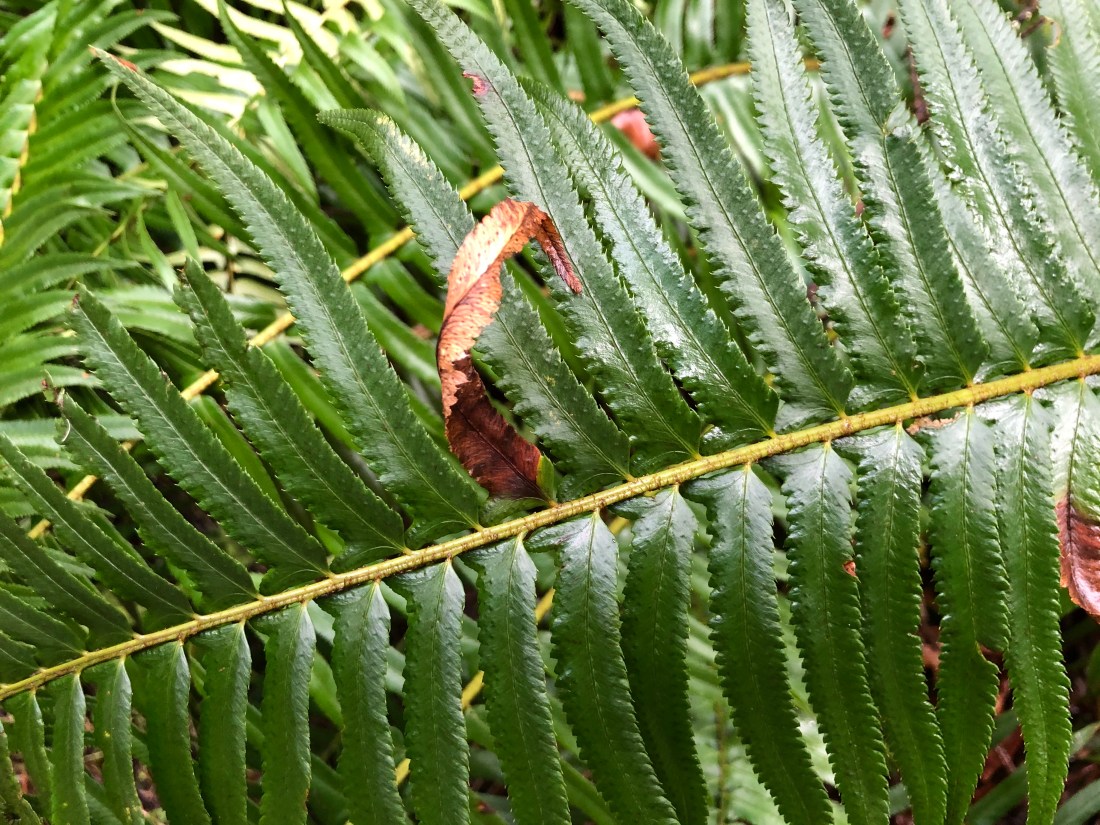
Cottonwood Seeds en Route: III. Suri Dihan

Each section is based on the Oxford English Dictionary’s word of the day from March, 2020.

This is the third entry in Cottonwood Seeds en Route. It is a continuation of Part II: Crystal Coleus.

I. Amour Fou, n.

“Morning, Suri!”

I finish the outline of
the swoop of the prince’s hair
(the kingdom’s kinda stuck in their 2000s-emo phase)
before looking up.

When I do,
Crys and Violet
are standing across the table,
holding hands.

“We have something we want to tell you,”
Crys says, blushing.
Violet is smiling
more than I’ve ever seen.

“Alright,” I say,
placing my pencil
in the crease of my sketchbook.

Crys stutters.
“Well, umm,”
she looks at Violet, who nods.
“We’re dating.”

“Oh my god, you guys!
That’s awesome!
I’m so happy for the both of you!”
I get out of my seat and hug them both.

I act surprised, but it’s obvious—
she watched The Good Place
within a week of Violet telling her about it.
I’ve bugged her about She-Ra forever.


II. Plutography, n.

Obsidian and ruby—
Carefully I draw in the shine on the prince’s necklace.
His silk robes, black as night,
wave in his castle’s courtyard’s breeze.

Is eyeliner too much?
Nah. He’s totally in his feelings.

He holds a goblet in his left hand
as a servant nervously pours wine in it.
A small band of lyre players perform
by a line of pink tulips in the background.

Kordra kneels in front of him, 
blushing, accepting their quest.


III. Informator Choristarum, n.

When I was in 7th grade, I was so excited
to join the choir.
My family sang all the time—
I always stole the solo or lead.

But there was a huge difference between
the music the director chose and
the Irani songs my family sang.

It didn’t feel like I fit there;
I was otherworldly.


IV. Astroparticle, n. (and adj.)

I don’t remember
if I’ve seen a student who looks like me
in Puyallup.
We have to drive to Tacoma for the nearest mosque.

It was hard for my parents,
when they moved here, being othered
everywhere they went, especially
after 9/11,
through 2003, when I was born.


V. Booky, adj.

Wednesday night,
I drive to Target,
clock in, walk to the break room,
put my purse in my locker.

“Hey Suri.”
Nadine sits at one of the tables,
doesn’t seem to look up from
The Things They Carried.

“Hey. Break or waiting for your shift?”
Nadine has a habit
of going straight to work after school
to read uninterrupted until her shift started.

She picks up an old notecard,
one of its edges curled and brown from age
(and probably spilt coffee).
“Waiting.
Tim O’Brien demands attention.”

“Because… of how they carry things?”

“Oof. Stop,”
she laughs,
gets up, puts the book in her locker.


VI. Geodynamo, n.

My parents
have always pushed me to do my best.
Their jobs are similar to mine,
which is why
I had to start working when I turned 16
to help support our family.

My parents
always talk about me becoming a doctor
or an engineer for Microsoft, but
I just want to draw.

My parents
talk about UW as much as Crys
(somehow possible), but
I keep looking at
student work on Cornish’s website,
Art Assignment videos on YouTube,
Muslim comics on Instagram.


VII. Historicist, n. and adj.

It feels necessary
to look into the past,
bring it with you,
showcase it somehow.
The past made what you are, you know?

That’s what occupies me
as I set up the endcap for
Hearth & Hand.


VIII. Metamathematics, n.

COVID-19 spreading
into Washington 
unearthed
what I thought was dying.
Brown skin
seems to be enough to
label as infected,
warrant wide berths in the hallway.

Usually,
it’s an occasional “joke,”
like some white boy in a COD shirt says
”Allahu Akbar”
before simulating an explosion
when I enter a classroom.

Or,
there’s a hesitance
when an adult tries to explain
something President Trump said.
It doesn’t really matter what—
they take long pauses, staring at me
while they talk.

My mom
lectures me about not wearing a hijab,
while Crys
lectures me about how they’re oppressive.

As if
anything
is that clear-cut.


XI. Trainspotting, n.

Everyone else
walks around
like they belong,
like they have a role to play,
like they are pieces of the same puzzle.

I
feel like I’m
sitting on a bench,
watching each one pass by,
losing count.


X. Geometric Progression, n.

Nervous.
Uncomfortable.
Like background noise.
Made worse
seeing people fit into boxes
with ease.
Like they come with instruction manuals.

I feel like
I can never find my box.
Maybe that’s why
my hijab never felt right.


XI. German Tinder, n.

When Crys asked me
why I never wear a hijab,
I told her it’s because
I wanted to be liberated.

When my mom asked me
why I never wear a hijab,
I told her it’s because
of racism at school.

Last year, one night
when my parents were getting groceries,
I put my dad’s taqiyah on my head
to see what it felt like.

It felt
the same way
my hijab felt—
not right.


XII. Timelily, adv.

It was during lunch this morning,
at the end of a half-day for conferences
that were canceled due to COVID-19,
when Isabella looked up
from her magnetism notes
to say to Nadine,

“Did Suri show you
her
drawing Kordra slicing off an ettin’s heads?”

It chafed.
It felt wrong.
I wanted to say something, but
I didn’t know how.

After I got home,
I got an email saying
tomorrow
is the last school day for at least six weeks.

It feels like something I should tell them in person,
the way Crys and Violet did.
Nadine and Isabella supported them—
Violet used Kordra’s pronouns right after I told her.

Tomorrow has to be the day.


XIII. Train-Scent, n.


Friday morning, snow
falls on the bus window,
blankets the grass and tree branches.
Static from the tires turns into
static from confused teachers turns into
static from the lunchroom.

Nadine is the last one to our table,
placing The Handmaid’s Tale next to her sandwich.
They’re all here.
I wait for a lull.

“Hey, uh.
There’s something I wanna tell you guys.”
They all turn to me; my throat is dry.
“Um, I’ve been feeling, uh, off lately,
like something isn’t fitting, and
I think that thing might be me.

“I mean— this is hard.
You know how Kordra is non-binary?
Well,
I think I might be too.”

There’s a silence. I can’t tell how long.

“So,” Isabella starts,
“do you want us to start
using they/them pronouns for you?”

“Um. Yeah. I think so.”

“No problem,” Crys smiles.
“Thank you for letting us know.
That was a brave thing you did.”
She starts to go for a fist bump, stops,
offers her elbow
for a more-hygienic elbow bump.


XIV. Uranography, n.

The night Kordra returns to the capital
to return the king’s scepter—
which cultists stole
for a ritual to summon a harpy army—
they walk to a hill on the edge of town
that overlooks the city and its harbor.

They lie against a madrone,
start connecting constellations.
Legends still play out
in the blue-black fabric.
Small figures move across a map
dodging dragon wings and poison fog.


XV. Black Friar, n.

“Now, just because schools are canceled doesn’t mean that you aren’t going to continue your studies.”

“I know, mom.”

“You will spend seven hours a day studying. An hour with the Quran, an hour with math, an hour with history, an hour reading. Each of your classes, you will find a way to study. No exceptions.”

“I understand. I will do my best. But, what if my hours at work change due to the closures, though?”

“Your studies come first! You are a student. Your school must be your first priority.”

“Alright. I’ll make it work.”


XVI. House-Lew, n.

Monday,
the first would-be-school day at home,
I wake up early,
start studying before my parents wake up.

When they do, they prepare quick breakfasts,
head to their jobs,
which, thankfully, haven’t been suspended
yet.

After the sun rises,
I prepare
eggs and toast
for my
brother and sister.

After they eat,
I send them to their rooms to read while
I clean the living room—
disinfect, sweep, vacuum—
then sit down to study trig.


XVII. Fleadh Cheoil, n.

Day two.

After lunch,
I clear the living room,
tell Yusef and Amina
to not go back to their rooms.

For about an hour,
I show them dances
our grandmother taught me
when I was their age.
I sing the songs myself.

Yusef giggles
as he trips over his own legs.
Amina murmurs
the lyrics under her breath,
gradually raising her volume.


XVIII. - Securiform, adj.

Day three.

I scoop same blackberry jam
on one of our small, rubber spatulas,
spread it on a slice of wheat bread
for Yusef’s sandwich.

“Suri,
I really liked the dance you showed us yesterday.”

“I’m glad, but
you’re not getting extra jam on your sandwich,”
I say,
pointing the spatula at him accusingly.

“No, no. It was just fun.
I’ve never really danced like that before.”
He looks at the counter,
rubbing his wrist with his other hand.

“I could teach you more today.
The same dance?
A different one?”

“That’s— well, is it normal for boys to dance?”

“Of course, Yusef. Everyone dances.”

“But none of my friends dance.
And you taught us a girl dance.”

“Dances are dances, Yusef.
You can dance whatever dance you want to.”


XIX. Talavera, n.

Day four.

I get the urge
to make something
with my hands.

My sketchbook:
buried in my backpack,
untouched since Friday.

Yesterday, I shelved
these bowls at work that were
an obvious, mass-produced appropriation.

Maybe I can try to draw
in the style like those bowls’s patterns,
fuse their culture to mine.

All art
borrows, blends;
we are all one.


XX. Baselard, n.

When Kordra was young,
they walked everywhere,
a dagger holstered on their hip.

Not welcome
by a family who
praised an unforgiving god,
lamented a blight on their names,
hid their faces in public.

When Kordra left home,
they walked across the kingdom,
a dagger pang in their chest.

Not welcome
by civilians who
glared at their dark skin,
winced at their accent,
scoffed at their pronouns.


XXI. Colour-de-Roy, n. and adj.

The morning sun slips in the throne room
when Kordra returns the king’s scepter.

The king rises out of his seat, walks to them.
His hand appears from under his purple robe,
a victorious eagle embroidered on his chest.

He accepts the scepter in his left hand,
His right on Kordra’s shoulder.
“Thank you, Kordra.
You have done a great service for our kingdom.
I am so sorry for how our order has treated you.
You have brought great honor to yourself and
the Order of the Cottonwood.
Our kingdom owes you dearly.”

Applause echoes off the aged stone walls.
Loud, overwhelming, Kordra starts to tear up.
In the last moment of clarity,
before their vision blurs completely,
they see the prince rise from his throne,
his smirk, his smooth hands clapping.


XXII. - Frammis, n.

“What does that even mean?
I don’t understand what you’re saying.”

It turns out
a pandemic
isn’t the best time
to come out
to your orthodox parents.

“That makes no sense.
There are men and women.
That’s it.
You think you’re a man?”

“No.
I don’t feel like a man or a woman.”

“Nonsense.
You are a woman.
You’ve been a woman your whole life.”

“Sex assigned at birth
has nothing
to do with gender,
Dad.”

“Of course it does!
It always has and always will!”

“It doesn’t have to!”
I pause to breathe,
to flatten the wrinkles in my mind’s bedsheet.
“Look,
cottonwood trees have either
male or female
reproductive organs—“

“Trees have organs?”

“The seeds, Dad.
That biological fact
doesn’t change how you see or treat
the tree;
you’d still walk up to it,
look at the fractured sky through its branches.
Gender is something people made up—
it has nothing to do with
the body a person lives in.”


XXIII. Bridge Coat, n.

For Kordra,
after the ceremony,
the prince fastens up his coat,
invites them to join him on a walk
with a head nod.

For me,
after I come out to my parents,
my father zips up his jacket,
rubs his eyes with his hands
as he shakes his head,
leaves.


XXIV. Macaronic, adj. and n.

Not going outside
except for work—
limited for me
by my mother’s request—
has disrupted my laundry cycle.
Nothing
seems dirty enough
to justify the necessary
water consumption
of the washer.

My clothes piled on my dresser
like a messy beanie.
My hamper
empty
as a classroom.


XXV. Leggiadrous, adj.

day nine, i think.
tuesday, i’m pretty sure.

feels like
i’m watching my family
live out a bad multicam sitcom—
unfunny and boring, an unlikable protagonist,
a formulaic rhythm.

that suri
wakes up, makes breakfast, studies
like everything is fine.
she
smiles and laughs and plays with her siblings
like it’s a normal day.

how does she do that?
she never misses a beat.
how does she keep up?
i’m exhausted.


XXVI. Proclivity, n.

Today, I take a break from
babysitting and acting like I’m reading
to draw.

I never realized
how normal
being around people all day
is in my life.
The absence is palpable
like a baking aisle without flour.

My hand sketches
outlines of people,
a crowd gathered for a concert, maybe—
shoulder to shoulder.

I miss
Isabella’s facts about Mars,
school-Nadine’s book recommendations,
Cris’s arbitrary soapboxes,
Violet’s questions about everything.

Their faces appear
on the figures in the front row.


XXVII. Wallydraigle, n.

It’s hard.
Competence.
Feeling any of it.

My laptop has endless
notifications from teachers posting assignments.
The counters have endless
dust from so many meals made each day.

Did I use this glass yesterday?
Did I shower this morning?
What day is it?


XXVIII. Anaerobe, n.

This morning, Isabella Skypes me—
still in the oversized sweater she slept in,
unkempt hair lazily scrunchied,
drinking from her SciShow mug.

Her way of coping with everything
is focusing on data, making charts—
I’ve never seen anyone
tear through a spreadsheet fast as her.

After she shows me some graphs she made
(so proud, that nerd), she asks,
“So, how have you been holding up?”

“Getting by, you know.
I gotta take care of
Amina and Yusef during the day,
but it’s all manageable.”

“That’s good. What about you though?
You been drawing?
Kordra go on any adventures?”

“Here and there, when I can.
It’s hard to find time.”

“I know what you mean—
Alejandro keeps me busy too.”
A Doppler effect of giggles and stomping;
she turns her gaze off frame.
“Can I ask you something about Kordra?”

“Uhh… sure.”

“Could they, like,
travel to another planet and fight aliens?”

A pause.
Laughter explodes from me,
the hardest I’ve laughed in what feels like years.
“What!?”

“What!? I wanted to help you think of adventures!”

“I don’t think space travel works in D&D!
They wouldn’t be able to breathe!”

“Sure.
Dragons and magic are totally logical,
but you draw the line
at the vacuum of space and aliens?
Preposterous.
There has to be a spell or something for that!”

“Why is everything always about
space
with you!?”

“Why is everything about
hunky, non-binary paladins
with you!?”

I laugh so hard, I cry.
We should so this more.


XXIX. Cockshut, n.

From the desk in my bedroom,
I can see the edge of ER’s roof,
which turns goldenrod as the sun sets.
It makes me think about endings.

How
this closure will end,
my time in school will end,
lives end—
how the day dies in long, drawn-out breaths.

When my grandmother was dying,
she showed me
an old painting by Massoud Arabshahi
she snuck a picture of at a museum back in Iran.
She said it stopped her in her tracks—
the cool colors, warm circles scattered
like a map of watchtowers or
“Allah’s ever-presence” as she put it—
so full of comfort
and anxiety at the same time.

She gave me that picture that day.
I keep it
above my desk,
next to the window where I can see
the sun’s shadow engulf the world. 


XXX. Baby Blues, n.

Can’t stay mad
at my mom
being so overbearing.

The last time
she was this
intense was after
Amina was born.

New checklists everyday,
every moment scheduled—
desperately seeking structure.

If she can
get through all
that, maybe she’ll
see me for
me one day.


XXXI. Sumpitan, n.

And so, Kordra
lays their sword across their palms,
kneels before the prince.

He grazes the blade with his fingertips.
“Are you really done
protecting our kingdom?”

They chuckle, shake their head.
“No,
the journey is never over, Your Grace.
It just changes shape.”
They lower the sword onto a cloth—
fine silk, black (duh)—
swaddle it, hand it to the prince.

They rise to their feet,
lift their pack onto their shoulders,
a spear knotted to its side.
They walk away, stop in the threshold.
“When you need me,
you’ll know where to find me,” they say.
They wink at the prince, and leave.

Continued in Part IV: Isabella Dudosa.

A Story, Sure.

I’m not good at beginnings and endings. I have trouble choosing the most impactful points in time for them.

By the time you read this, I’ve figured out how the story ends. If I care about the efficiency of communicating information to you, I’d get to the point and tell you that George gets a promotion at work, loses his wife, and leaves a cult with his existential issues still intact. The specific points in time don’t matter, since George fails to change after the Thursday on which all of these temporal slices occur.

But, without context, you probably don’t care about George, his job, or his wife. Most readers, not you, of course, would demand for some sort of event to help you bond with George. They want to derive meaning out of whatever happens to him, even if there is nothing to read into.


So, I have to give you a beginning. I just don’t know what the right beginning for George’s story is.

I could be a pretentious art film, start with the Big Bang.

We start with a boom, a matte white screen that fades to black, then two nebulas form. Purple clouds that spiral, pull together, form two stars. We watch them play a game with gravity until they make a binary star system. 

They orbit each other. Sometimes farther apart, sometimes closer, until they collide. There’s a large spark; the orchestra crescendos. Bright chunks of matter fly in all directions, and the screen goes dark.

You’d probably read this as an allegory (or, if the academics protest, at least a solid metaphor) to foreshadow what happens to George. You can do that, if you wish.


Or, I could choose to start the story before George was born; I could tell you about his parents.

They were typical products of the 60s. Long hair, flowers punctuating their hairlines. They misdirected their frustration with a war they disagreed with on the veterans of said war. It was embarrassing for everyone.

His parents never really settled down. They fought on a regular basis about things that ultimately didn’t amount to much more than which nightly news show they should watch during dinner.

But, none of that is really necessary to George’s story; as none of that involves George directly. Yes, this could be another example of reading into foreshadow for how George’s life shapes. But, of course, it doesn’t, because he never met them. They gave him up for adoption immediately after he was born. 

I should have said that earlier. All apologies.


I don’t really know how to tell you what happened to George. 

I really just wanted to tell you that on Thursday, May 14th, 2015, George woke up later than usual, after spending Wednesday night at the temple of a religious organization (i.e. a cult) he joined a few weeks prior. 

He followed a breeze from the folded-open sheets across the bed to the open bedroom door.

He walked by some copies of The Secret his sister got him piled on his dresser on his way to the closet.

He decided that Thursday, May 14th, and all Thursdays that dare to be May 14ths are doomed days.

Until he got to work, oddly enough, where his manager had interpreted his past few brooding months as introspection on the process the business uses to boost sales, and, consequently, gave him a promotion to sales director.


But, is that where his story ends? Should that be where I leave it?

I mean, George persists after that Thursday. 

In the research we did on Thursdays that happened to be May 14ths after that day, the results were inconclusive; they were just as chaotic and random as any other Thursday or May 14th.

George didn’t keep his job forever. He came back from his divorce in better spirits. He did not, however, overcome his ennui.

Usually, the author wouldn’t tell you this. They’d leave you with the end of that Thursday, and you’d go on your way thinking that George had a good life afterward.

I can’t do that, though. 


George’s life wasn’t tragic by any means.

He didn’t suffer terribly much, aside from the lung cancer that eventually killed him.

He lasted long enough to retire from his job. The office had a retirement party, where he saw all the people he didn’t know celebrate the fact that they got cake during work.

He grew old enough to start forgetting things. He forgot the foster homes he stayed in, his first wife. He remembered his 3rd grade teacher being awfully strict, though. 

His children discussed this peculiarity with his doctors, and they all scratched their heads and shrugged their shoulders.

They don’t know what caused it. Or what it meant. But it happened nonetheless.

First, you smell the sulfur.

First, you smell the sulfur. You feel warm concrete on your fingertips. It creeps to your elbow. For a moment, you think about proximodistal development, whether this would be a good counter-example. Then, you remember what happened.

You get fleeting images only. Clocking-out at work. Orange clouds over grey buildings. Horns. Concrete— you remember thinking it looked comfortable, as if you could sleep there. Flying cars. Fire. Shockwaves. Black. You open your eyes.

Your eyes focus on the gravel first. Inches from your face, you see more detail than you ever thought possible. Intricacies fade as your gaze sprints forward. You see smoke sweeping through the parking lot. The sky is black, leering over burning storefronts. No stars. No streetlights. Horns sprout from the ground.

You process colors first. The head: black, seemingly caked in soot, ash. The body: red, blood stains. You try to focus on details, but they keep shifting like a taillight behind a rainy windshield. It looks at you, moves forward. You get to your feet.

You realize you aren’t hurt. You reflect briefly, but cannot figure it out. The creature smiles at you. You feel your arms rise, your mouth open. You hear a thunderous scream— sounds from other worlds. Your story is over. You’re a passenger in a gondola.

She Thought It Was a Good Day

Emma woke up around noon. She opened her eyes, saw her bedpost. Must have fallen off the bed while she slept. A cluster of dust bunnies huddled on the right side of the post.

She imagined them planning their next attack on her throw rug. Standing around a little map of her bedroom, the general seated in a little throne made from a gum wrapper. They would attack from the north and east, cornering her beloved rug between the dresser and the bed. It would have no chance against their fire arrows and cannons. The epic battle would last four days, the throw rug about to surrender and begin composing a treaty to the dust bunny general—

Emma realized she had fallen back asleep and forced herself up. It was now a quarter to one. She untangled herself from her comforter, a butterfly about to emerge.

She blinked four times. Quick. Quick. Slow. Quick.

The room was well lit by the sun. She avoided tripping over her piles of Hemingway and Faulkner, but kicked Melville all over the floor. She chuckled at her own symbolism.

Emma dragged her feet to the kitchen and poured water into her old teapot. It reflected the sun’s light into her eyes.

“Damn it!”

The teapot’s impact echoed from the sink. She picked it up and slammed it onto the stove. She grabbed a mug, debated which tea to drink. English Breakfast seemed the most logical. It also made her feel regal.

After drinking her tea, Emma got ready for the day. It was almost four.

Her phone’s blue light shined through her living room. It was a message from her friend, Erica, who wanted to go on a walk. Emma looked at the pile of reading she had to do that weekend and decided to go on the walk.

They met at the park at the edge of their neighborhood. When they were kids, they would play there after school— tag around the slide, backflips off the swing set, castles in the sandbox. The slide was taken away when they got into middle school, the swings in high school. Oddly, they left the swing set’s frame, only removing the swings. So, a rusty lower-case N stood in a mixture of gravel and bark, victorious in its war with time.

Emma stood by the frame, ran her fingers over the rust. The blue paint that mirrored the summer sky was still clinging to parts of it. Some was eaten by rust. Her pinky finger moved from the rust onto the paint, but it flaked and fell to the ground. She stared at the lonely flake as it lied on the cold gravel.

By the time Erica arrived, Emma had lied down by the flake and began staring at the sky through the gaps in the trees.

Erica approached hesitantly. “Emma?”

“Yes?”

“You doin’ ok?”

Emma shook her head, “Yeah. Yes. I’m fine. Yes.” She picked herself up and brushed off her arms and legs. “How are you?”

“I’m good, not laying in gravel, the usual.”

“Hah hah. So clever.” Clouds of dirt and bark glowed in the evening sun. “Do you have anywhere in mind?”

“I was thinking about going through the woods to the pond.”

Emma agreed, and they headed off, talking about what they had done over the summer, the people from high school they hated, and their confusion over Pierce College’s registration process.

The conversation was fairly one-sided. Erica dominated, choosing which tangents the conversation should go on, like a park ranger leading a hike on a trail with many forks.

Emma didn’t mind. She understood that Erica exaggerated her views a lot. It seemed like Erica found some comfort in portraying a caricature instead of her real self around other people, like how a sunny winter day looks warm, feels cold.

They arrived at the pond around five-thirty. A mallard couple swam by the dock they stood on. The sun danced on their ripples. Emma assumed they were on a date.

Erica stared at the mallards. “Remember when we came here after Josh broke his arm in 7th grade?”

“Of course.”

“I remember seeing him in gym. We were playing dodgeball, and he was the last one left on his team and he took a huge drive to avoid one of those red, smelly balls, and he hit the floor, and there was this empty thud, followed by him yelling, ‘Fuck!’ and the teachers debated over scolding him before they realized he needed help, and…”

Emma had heard this story a hundred times. It happened every time they came to the pond or Erica thought about something bigger than herself.

“… We all came here after school, and we started trying to figure out what had really happened…”

“Yeah, and Dina wouldn’t shut up about all the blood.”

“I know! There wasn’t even that much of it either!” Erica laughed at the memory. Emma smirked.

The two sat on the edge of the dock with their feet in the pond, kicking cool water into the warm air.

Emma focused on trying to create a momentary rainbow while Erica recalled other stories about Josh, Dina, and other people from their childhood. She considered it a good use of her time.

Cottonwood Seeds en Route: II. Crystal Coleus

Each section is based on the Oxford English Dictionary’s word of the day from February, 2020.

This is the second entry in Cottonwood Seeds en Route. It is a continuation of Part I. Violet Caligos.

I. O, n.

When Violet says
she got accepted into the program,
I squee.

Not new-One-Direction-music-video level—
we’re in class— but
I squee,

and hug her
until she sputters,
“Crys. Please. My ribs.”


II. Mauvais Quart d’Heure, n.

I hated my red hair
for years.

In third grade, the boys
whose parents let them watch South Park
started calling me soulless,
a monster.
They said it was a joke,
but after 50 times,
it started to sound like
a fact.

If another white guy tells me
media doesn’t shape culture,
I’ll scream.

So, a week before 7th grade,
I dyed my hair black.
Dyed it every time
it started to show again.
Kept it buried.
It took me until last year,
when I started going to ER,
to dig myself out of the shame I felt.


III. Zeuxis, n.

At lunch, Suri shows us
a piece she’s working on for an art contest
through the Pierce County Library System.
“Well? What do you think?”
Her eyes bounce from face to face
hectic as reporters after a press conference.

I’m not good at art.
I can type 800 words on
the implementation of meatless Mondays at lunch,
but I can’t even draw trees.
What Suri’s done—
the shading, the soft details,
familiar, intimate,
“Stunning.”

“You really think so? I mean I know I spent a lot of time on it, but, like, it’s just us, you know, but as like a hydra, and instead of elemental powers or whatever it’s writing and art and science and stuff. It— it’s dumb. I don’t know.”

“I love it,” Violet says,
bringing the cuff of her hoodie to her eye.


IV. Religieuse, n.

As a
Mormon,
I don’t consume caffeine.
I drink La Croix for the kick, but
I recognize
my body shouldn’t be exposed to addictive
substances—
I should be able to stand and breathe on
my own.

It doesn’t make sense to
me to block
gay people from
Heaven, from
God.
I don’t think
I am less of a
Mormon for that belief—
our church was founded on the
principle of standing up for what
you believe.


V. French Cut, n. and adj.

“Looks like Jaime Smith is running again,”
Mom says at the dinner table, spinning spaghetti noodles in her fork.

“Oh? That’s good. She got close in the midterms, right?” Dad asks, dabbing his mouth with his napkin.

“Mhmm. Only lost by 600 votes.”

“Your office gonna doorbell?”

“Probably. Depends on how much Jennifer wants to organize.” She shakes her head. “We should do it, though. We can’t have another term of Chambers.”

Dad nods, tightens his hair tie. “I’ll probably not have this by then. Better curb appeal, I guess.”

“Dad, no one is going to care if a grown man has long hair anymore,” I interject. “It’s 2020.”

“It’s Puyallup, Crys,” he responds. “Plus, someone’s gonna need it more than me by then.” He smiles, drapes his ponytail over his shoulder. “A couple more inches, I think, and it’ll be long enough to donate.”


VI. Letterato, n.

Violet came over to
study for the SAT.

Digging a notebook out of her backpack,
she asks,
“Are you sure
you need to take it in March?
Can’t it wait
until June or something?”

“You need to make sure you get a great score to have a great application so you can get into a good college with the best professors and good programs so you can get a good job and have a fulfilling career to be able to afford a good house and provide for your family and your parents when they need you and you need to prepare for a good retirement yourself—“

“Crys.
Crys.
Pause.” She interrupts. Her hand
on my knee. Her steadiness
makes me realize how much it was bouncing.
“You have to live in today, not 50 years from now.”

I close my eyes,
try to still the tremors in my fingers.
“But you can’t just live in today,” I say slowly,
“You need to think about 50 years from now today to be prepared.”

“You shouldn’t
let tomorrow consume today though.
You need
balance.
You need
to breathe.”


VII. Kirkify, v.

I love history.
So, when I find out
we’re going to do presentations in civics
about how religion has shaped politics,
I go all in.

Our group gets assigned
Presbyterianism.
Violet and I agree to do research,
Suri says she’ll draw some pictures
to make our slides unique.

I love history,
because the closer you look,
the more complicated everything gets.
There are nuances on nuances;
no one’s great, no one’s evil.

Mark. A Matthews,
First Seattle’s longest-serving minster,
backed progressive ideals—
fought against governmental corruption,
helped create Harborview Medical Center.
He even went to Congress to argue
on behalf of Japanese immigrants
during World War I—
before the whole
putting-them-in-concentraition-camps period.

But Mark A. Matthews
argued against women’s suffrage,
argued against unionizing workers,
argued that Jewish people were the real menace
to the United States.


VIII. Literose, adj.

Revision
is the hardest part of
the writing process.
For me, anyway.
Mostly because
I tend to go a bit
overboard.

I’ve been practicing
college application essays
whenever I can,
and
I keep doubling the maximum word count.
And,
when I go back to see what to cut,
every word, every detail,
seems important.


IX. Mug, v.

Over the last few weeks,
we’ve had rain pretty much every day.
Slick roads, large puddles,
perpetually obfuscated sun.

Over the last few days,
we got hit with a rainstorm.
Torrential downpour,
power outages, floods.

It made me think of when
you have four projects due
the same week, because
teachers don’t coordinate with each other, and
you have to stretch
your time management/organizational skills
on top of what they already expect of you;
how overwhelming all that is;
how those weeks
make you appreciate
times when there’s
only an occasional worksheet due.


X. Crimp, v.

A part of our presentation grade
is everyone speaking in front of the class.
Suri thought
if she put extra effort into her drawings,
it might be excused.
It won’t be.

The day before our presentation,
we practice
after school
in Ms. Hendrix’s room.
Suri mindlessly riffles through her notecards
while we plan and organize.

First few run-throughs,
she riffles between every slide,
reads word-for-word from each card,
never looks up.
She asks us (Ms. Hendrix included)
if we can sit in the audience while she reads.

After seven times,
she looks up at the end of her sentences,
thwaps her cards with her thumb
when she finishes her slides
without looking down a second time.
Ms. Hendrix changes seats each time,
says when she can’t hear us,
applauds at the end every time.

In the last run-through before the activity bus,
She glances only at the beginning of each slide,
adds hand gestures,
ad libs details about what she drew.


XI. Ice Bolt, n.

When it’s our turn,
we get up to the front of the room,
stand just like we did when we practiced.

It all flows, smooth
as the extra milkshake from the cool tin cup.
Violet and Suri kill it.

I
say Matthew A. Matthews
instead of Mark. A Matthews,

and I try to go back, correct it,
but my mouth hangs there. No sounds—
my notes become doodles.


XII. Missment, n.

I look at Violet,
try to talk with my eyes.

She shuffles her notecards,
continues, “Mark. A Matthews was a minister…”

Suri carries the last slide
until the lunch bell rings to end the period.

I walk to the bathroom,
sit in a stall, my face in my hands.

Violet knocks on the stall door,
says, “Crys? Hey. We’re here.”

Suri scoots her sketchbook, opened to a page which
says, “It’s ok. It happens. We still love you.”


XIII. Bastle House, n.

“You know,
a bad presentation isn’t the end of the world.”

“It’s the grade
that UW is going to see, Violet.
That
is the end of the world.”

“... You ever think about those houses
they’re building over by Glacier View?”

“… What? No?
What does that have to do with anything?”

“It’s just— like,
there are all those people
building those houses, right?
They’re all responsible for something,
the job has to get done, and done right
or the people living there won’t have
power or flushing toilets and stuff.”

“… Yeah?”

“Well, so—
it can’t be possible
for all of those people
to be perfect all the time, you know?
There has to be a misplaced nail somewhere,
a loose cabinet door.

“But the house is still there, Crys.
The house still has lights.
The house still flushes poops.
Even if one of them messes up a little bit.

“I don’t think one bad presentation
would make UW hate you.
And,
if it does,
we can egg their admissions building.”


XIV. Bae, n.

There’s something in
how she rustles her notecards,
how she says “poops” to make me laugh,
how she comes up with metaphors for everything.

I don’t know what this feeling is—
my stomach hurts.

She’d say that I’m just like Chidi,
and I think
she might be my Eleanor.


XV. Home-Along, adv.

You know how when cottonwood pollinates,
its seeds fall everywhere
like a switch is flipped—
one day there’s almost nothing,
the next it looks like a blizzard?

That’s kinda how I’m feeling now— everything flying in all directions,
no navigation.

I usually talk things out with my parents,
but I’m afraid.
They’ve always said they love me,
they’ll support me in whatever,
but there’s no guarantee
their actions will match their words.
We are Mormon, and
we’ve all sat in the same sermons
with the same old rhetoric.

We go on a trip to the San Juan Islands
for mid-winter break—
a four-day weekend around Presidents’ Day.
Dinner is awkward— for me;
they all seem normal.
I don’t know if now is the right time, but
what would a right time be?
There’s no universal 
tell-your-parents-you-might-be-gay
scenario.

We’re in a public place,
a brewery with a local guitarist playing “Homeward Bound.”
I think now is
as good a time
as I can get.


XVI. Deek, n.

They say the right things
like they’re reading from a script.

But, it’s the way
they avoid eye contact
for the rest of dinner
that shows their discomfort.


XVII. Gribiche, n.

The next night,
we eat at a French restaurant
overlooking the sound.

My mom
lifts a spear of asparagus,
scoops the spread from the dish
on the platter.

“It’s not that we don’t love and support you; it’s that the you we thought we knew is gone.” She dabs her lips with a maroon cloth napkin.

“I’m not gone. I’m still here.”

“But the you that was in our heads, the future-you that we imagined, is gone.”

“I don’t think my future-me has changed. She can’t be gone. I’m not even sure what I am or what I may be.”

“So it’s possible it’s just a phase?”

Silence.

“It’s just a lot to process, Crys. Nothing like this has happened in the Coleus family before. It’s going to take some time for us to get used to it. I’m going to pray on it, I promise.”

“You shouldn’t need to pray on it,” I wish I could say out loud. “I’m your daughter.”


XVIII. Gype, n.

Violet and I
go out to watch Birds of Prey
Monday night,
the end of Mid-Winter Break.
Her second time—
she couldn’t shut up about it.

Absentmindedly
I put my arm on the armrest
where hers is.
She nudges her arm to share.
Our elbows touch—
my skin’s on fire.


XIX. Hailsome, adj.

She rests
her head
on my shoulder.
I hook
my pinky
around hers.

I feel
so warm,
so whole—
like I’m home.


XX. Hake, n.

Back at Edgerton,
when they taught us how to watercolor—
second grade, I’m pretty sure—
I always used the thinnest brush.
I focused on each detail—
small, smooth strokes.
Yes, even the sky;
I rarely completed a painting.

I’m a bit embarrassed to say
I continued that pattern—
focusing so much on school, college, the future,
I never stopped to breathe.

So, it feels big
that in this breath,
the warmth in my chest
when Violet swooped her hand under mine,
interlaced her fingers in mine,
is still there the next morning
when it’s so cold even the clouds stay home.


XXI. Overton Window, n.

A few days later, when we get to my house after school, Violet kisses the back of my hand, which she’s been holding since I shifted into drive (not the best driving practice; sorry, Mr. Williams).

Violet sees my mom’s Outback parked in the driveway. “So, have you told them?” she asks, leaning her head against the headrest.

I sigh, close my eyes. “No. I haven’t.” I look at my Tetris keychain dangling from the ignition, afraid to see her disappointment. “I’m sorry.”

Her voice is soft, starts as a half-whisper. “It’s alright, but why not? I thought you said they were cool with you being gay?”

“That’s what they said, yeah, but the way my mom tiptoes around me now… She hasn’t told the rest of the family yet, and she told me to not say anything to them either, because THEY wouldn’t be ready for it yet… I’m not sure she’s really ready for me to be dating someone. Like, I’m afraid she’ll antagonize you, and that would kill me.”

“Okay.” Another half-whisper. She nods, thinks for a bit, tapping her fingertips on my knuckles in a rhythm I can’t follow. “So, how many points do you think you lose if you antagonize a queer teenager? Like, a thousand, right? Because of the increased risk of depression and stuff?” Her smile is sad, but still warm.

“Yeah. Easily,” I chuckle. “A real dick move.” I kiss the back of her hand.


XXII. Bloody Caesar, n.

Saturday morning,
I wake up
more tired than when I went to sleep.
I sit on the top of the staircase,
my body not wanting to move anymore.

Mom sits
at the dining room table,
Warren and Sanders pamphlets
litter its surface.
The smell
of the cocktail
she drinks on weekend mornings
wafts up the stairs.

“You think we should
drive or take the light rail to the rally?”
Dad asks.
He places his mug on the table,
takes a seat,
grabs one of the Warren pamphlets.

“Traffic in Seattle is going to be awful.
Especially
if the protests at Kennedy Catholic keep up—
I can’t believe
they would force
teachers to resign because they’re gay.
So, I think the light rail might be better;
her campaign’s said
they expect a large crowd.”
No hesitation in her voice,
no doubt.

I exhale,
head against the railing,
elbows on my knees,
face in my hands.

Her pastime seems to be
comfort at a distance,
like a church dance
where you need to leave room for Jesus.


XXIII. Swellegant, adj.

My parents leave early to get to the rally,
wanting to be first in line for volunteers.
I thought about going, but decided
to stay home
to work on an essay for civics on caucuses.
Plus,
if Lexi can’t even manage to focus for algebra,
she definitely wouldn’t survive political speeches.

When I think about Seattle,
I see people free
to express who they are, open
and accepting and weird.
No closets there,
no skeletons hidden in old Ikea bags.

I know it’s not true; it’s a fantasy. But,
I see myself
walking across UW’s quad some spring morning
as the sun meets their cherry blossoms—
quiet, peaceful.


XXIV. Yes But, n. and adj.

family is important and you shouldn’t upset them.

yes but i deserve to be true to myself.

yes but that is selfish, crystal. you have to consider what other people need.

yes but hiding myself for the sake of everyone else means that i’m not even worth my own respect.

yes but you need a place to live until you graduate high school and you shouldn’t risk that kind of stability.

yes but being with Violet makes me happy. 


XXV. Dicker, v.

I hate
hiding from them,
feeling ashamed.
I hate
hiding my relationship with Violet,
making her feel like I’m ashamed of her.

Dad’s family
comes over after church every Sunday.
Maybe
I should tell them then.
I can figure
out a way to ease them into it—
I’ll write
a hasty Facebook post in case I chicken out.

Violet will hold me to it.


XXVI. Swinehood, n.

After church,
aunt Clara and uncle Wyatt arrive.
Five children
flood out of their Expedition
into the driveway.
Clara balances a bowl of orzo salad
in the crook of her left arm as
she waves at my dad.

Their kids run around the yard as
we eat brunch.
After covering pleasantries, the work week,
Wyatt steers the conversation.

“Did you hear about the new Supreme Court case?”

“Oh yeah!” Clara answers, “The one about whether gay couples can adopt! Can you believe it?!”

“Right,” My dad nods, coughs. He and Clara were raised to never discuss politics, so they rarely ever talked about the news. “That’s a big deal.”

“It IS a big deal!” Clara agrees. “They’re trying to restrict that agency’s religious freedom! They can’t do that!” She waves her arms, gesturing at the obvious oppression.

“It’s a terrible thing,” Wyatt adds. “I mean, there’s plenty of research that suggests that kids need a mother AND a father.”

Both of my parents politely nod. I burst.

“So what, I shouldn’t be able to adopt a kid if I want? You wouldn’t trust ME with a kid?! Are your kids messed up from all the times I babysat them?!

“A person’s orientation has nothing to do with their parenting ability— are you kidding me?! I cannot believe how intolerant you are, how willfully ignorant you are! It’s obscene!”

My fork clangs as it hits my bowl. I feel tears boil on my cheeks. I gasp for air, stand up. “Excuse me.”

There’s silence as I walk into the house. The tap of my shoes on the hardwood floor bounce off stunned walls.


XXVII. Twite, n.

I lay on my bed, stare at the ceiling—
gray as wintry clouds.
I imagine a small bird,
brown like Violet’s eyes,
flying south to escape the frigid breeze.

Cold and alone,
lost in the current,

until she finds a flock of birds,
different colors and shades and hues
like the intricate, harmonious patchwork of a quilt,
that welcomes her with ease.


XXVIII. Yevery, adj.

What is a family that doesn’t see you?

I won’t let them
dig a hole in my heart.
I won’t let them
make me feel empty.

I want more than that.
I want
to come out
to everyone,
to get a bold haircut,
to be with Violet with no shame,
to demand more diverse books in ER’s library,
to demand representation in history and English classes.

They will not hide me.
I will not be erased.


XXIX. Resiliating, adj.

Monday morning,
I text Violet
that I want to tell our friends about us
if she’s okay and ready for it.

My phone clacks
as I put it on the bathroom counter
to brush my hair.
In the mirror,
there’s a fire burning on my scalp, tendrils
try to reach the ceiling.
My brush was
like a helicopter with a water tank containing
a forest fire.

Last night, I told her about what happened
with Clara and Wyatt.
I ugly-cried on FaceTime and everything.
My parents didn’t came to my room—
still haven’t talked to them.

A post-it note I find
on my door when I leave my room
in Lexi’s handwriting reassures me
everything’s going to be alright.
She wrote:

“Crys—
ur the best big sister ever
ur the bravest person I know
love u forever!
- L”

Continued in Part III. Suri Dihan.

I Wanted to Write Something You’d Like

You always told me how much you liked the way I describe things, so I’m going to try to do that now. 

I had just got home from work. I parked my Focus in the driveway. The early-December frost was still lazily slumped in the corners of the curb. The clouds had layers, many wispy strands floating together attempting to make a uniform grey sheet. The air was cold and thin, much as it always was on the top of the hill we lived on. 

We called it a hill, anyway. Ryan and Laura had called it a mountain when they first moved here, remember? They were really confused when we laughed, and then we got into a senseless argument about the differences between the definitions of “hill” and “mountain.” Far too academic for such a stupid thing. 

Right, so, I had left the car, situating my your-beanie on my head. Thank you, again, for finding it in a shoebox in the back of the closet when I had lost mine, and subsequently not wanting it back. The car’s warmth that had soaked into me and my clothing dissipated far too quickly; I hate thermodynamics. 

I went to get the mail, the chore I always do before going inside the house. The sidewalk, somehow, still had a layer of frozen dew. The border of the frost followed the shadows of the Diaz’s house and Tyrell Jackson’s pick-up. There was a soft, faint crunch when I stepped. Not a full-on-snow crunch, but there was an attempt, like Simba trying to impress Mufasa with his roar.

The mailboxes recently got changed from the individual sub-sandwich-shaped boxes nailed to several two-by-fours to the factory-farm-chicken-cage letter prisons on metal poles. Our box was number 7, even though our house number was 23561. I don’t understand why they couldn’t consolidate the numbers to be the same— I’ve talked your ear off about this thing before. Too much, in fact. I’ll move on. 

There was nothing there. Well, there were ads for Safeway and Albertson’s, but those don’t really constitute mail; anything that lands in the recycle bin instead of on the dining room table doesn’t count as mail.

The apple tree in the corner of the Tanaka’s yard by the mailboxes was bare. Its branches were thin and weak in the breeze. A plump robin perched on one of the lower branches, making it and its relatives bob up and down under its weight. It must frequent their bird feeder. The robin’s head twitched left and right, seemingly unperturbed by the cold. Perhaps by instinct, perhaps realizing how alone it was, the robin took off and flew down the block. 

Our mailbox, if you remember, was around the corner on 22nd Street. The view on the way back, where 22nd meets 162nd, faced west. When the sky was clear, we could see the Olympic mountains. Today, the wispy clouds bunched up high enough that the silhouette of the mountains from the setting sun was crisp. A deep-orange fire burning behind the glaciers and rock reached up to meet the blue-black of the evening sky. 

The colors blended, or met, or touched— I don’t know, but there was a line in the sky between them. It felt like there should be a word for it. Or, maybe I thought I was supposed to see some undiscovered color that would give me some transcendental realization. But there wasn’t a word that could placate me, no epiphanies. 

I didn’t turn on 162nd back to the house that day. I kept walking west down 22nd, taking deep breaths of icy air, seeing how long I could exhale steam. The steam coned out from the pinpoint precision of my mouth to the broad shotgun array a few feet away, before losing all sense of rhythm and deforming into clusters of chaotic clouds. 

At the end of 22nd, where the housing development started to turn back on itself, there was a clearing on the northern corner— something about how if the number of houses exceeds x, then the developer needs to build and maintain a small park, so the lot was left empty. The wild grass still had white tips, completely untouched until my footsteps broke their peace.

I could see the abandoned golf course from the lot. Well, the edge of it, around the tree line— you know. We drove by it whenever we went to the highway, and we had walked around the lonely concrete trails that lead from hole to hole. There were three parked cars on the shoulder of the spur that lead to its parking lot. The company that bought the land barricaded it years ago, but never did anything else with their purchase. 

I had always meant to draw up a map of the golf course and blow out the proportions to become the world for a story I had thought of. When we had gone on our first walk around it, I had started piecing together the cities. There was a railroad track along the eastern side that would transport goods throughout the towns along the foothills of the impassable mountain range. There were rolling hills and vast lakes and small, dry patches of desert; ocean would hug the western coast.

The story was supposed to revolve around a woman making a dessert for some special occasion, how stressed she felt while making it. Maybe stress isn’t the right word; she would be excited to make the thing and for people to eat it, but she wanted it to be perfect. She’d walk around the floating flour specs of her kitchen and pour precise measurements of sugar into different measuring cups, some complicated fractions would stick out from the recipe that would need to be broken down and converted.

With every ingredient she’d add, there would be a cut away to another person who would be moving through their daily routine to gather, package, distribute, or sell the ingredient the woman just used. Their lives would be rough and stressful and tiresome. Then, it would jump back to the woman and her dessert.

I never wrote that story. I had thought about it, as I said, but I never wrote it. I knew that if I did write it, I’d show you, and you’d probably tell me it was weird. So, I’d save it on an external drive somewhere and always mean to come back to it and fix it, but be too afraid to read it again. Its 0s and 1s would sit on that disk undisturbed until the end of time.

Maybe I should have written it. Maybe you would have liked it. I don’t know.

The orange was dimming around the peaks of the Brothers and Mount Constance. The bones in my fingers were starting to ache. It’s weird how the cold pierces so deeply so suddenly. Small icy flakes shifted horizontally in the air carried by the soft northerly wind. I started to walk back to our house.

Your hatchback was in the driveway. I had forgotten. It had sat there for several months, and I had seen it there every day, but I had momentarily forgotten that you were gone. 

This realization happens too often, I admit, but your death just hasn’t dug its roots deep enough. I’m afraid they never will, that I will keep forgetting and having to remember all over, and the gale of grief will consume me again.

I cried that day. I curled up in the front yard and hugged my knees into my trembling chest. The grass was cold and wet, slowly changing colors in the faint glow of the Morozov’s Christmas lights.

A Morning in Kroa

The sun rises over the Haurathon, the centerpiece of Kroa. Its spire shoots out 1000 feet above the neighboring buildings. The Haurathon is used as the symbol for Congress, who use it to decorate their lapel pins, our flag, our money. You are to never forget about the Haurathon or Congress— they own you.

Sunrises are my favorite part of the day. The way the sun peeks at Kroa, like it’s wincing, makes me feel seen. It looks at me directly, tinted in the haze of the green fog dissipating from the streets. I think the beauty may be in the way Congress’ night poison rises with the sun, like a final battle cry to the heavens.

“Aja. It’s time to wake up,” I say to my sister. She’s sleeping on the couch, as she does almost every night. Her feet stick out of a mound of blankets covering the couch cushions. 

White stitches stretch out where we sit every night. Our family has had that couch since both our parents were alive; I guess that would be at least eight years or so. The dark green upholstery, the color I remember old fir trees having, has faded a lot since then, too.

Aja rolls around under the blankets, making tired groans. She says half words and flails her arms. Usually, it’s around this time that I pick up one of the blanket edges to help her out. This morning, I do not.

There’s a picture on the mantle
in a simple black frame
with four people in it.

One was
a woman with a black ponytail
and wrinkles around her smile
and small, green eyes that asked you how your day was,
          and was Mom.

Another was
a man with a thick beard
and a lumberjack’s flannel shirt
and thick arms that would hold you up to see over the crowd,
          and was Dad.

The smallest was
a girl with brown eyes
and small hands that held an old 3DS
          and was Aja.

The last one was
a girl with dyed purple hair
and a shirt from a cyborg-punk band no one listens to anymore,
          and was me.

The corners are chipped and faded.
Dust layers tint the grass’ green hue.

I sit cross-legged on the coffee table, facing the window, the couch on my right. The Haurathon dominating the view. I can feel steam from my coffee graze against my chin out of the mug I made Mom back in school. It’s wide, the sides thick and lopsided. The purple paint starting to peel around the edges. Coffee stains line the rim on the inside, no matter how much I scrub it.

“Boa, any help would be appreciated,” Aja grumbles.

“You’re 14. You can figure it out.”

“Not when the blankets travel between dimensions!” Two mountains erupt under the blankets.

“There are only three dimensions, dummy.”

“No lines think there are squares, Boa.”

I pause, sip my coffee, bask in the bitter grip in the back of my throat. “Still dumb.”

“Boa! Please! I’m dying!”

“No you aren’t.”

“I can feel Death’s cold hand on my neck. He’s dragging me into the abyss! Boa! Take care of Cat for me! Noooo!!!” Her plea fades.

“Super dumb. Cat doesn’t even need us.”

“Fine.” Aja sits up, blankets cocooned around her.

Cat sits in front of the window, staring at us. She gives me a disappointed meow, stretches her forelegs, saunters off, her chin up. 

“Cat hates you,” I say, taking another sip. The sun starts to give definition to the clouds. I can see shapes forming, green and white clusters.

“Cat loves me,” the blanket pupa replies. “She could not live without seeing my beautiful  face.” The blankets peel away, and Aja emerges. Her short, black hair sticks out in all directions. She reaches her thin arm out of the oversized shirt she wears to bed and grabs my mug. She takes a sip and recoils harshly. “Nope. No. Still no. Never. How!? Why!?”

She quickly puts the mug back in my hands. “Get up. You’re going to be late for class.”

She lets out a long, exasperated sigh. “But I’m sick!” she counters, giving two well-paced coughs into a blanket. “I think I should just stay home and rest,” she continues, putting one of the blankets back over her head.

“You literally said the same thing two days ago.”

She pauses. “But the blankets are warm, and comfy, and I named this one Gerard.” She pulls out a quilt Mom made. It has red and white squares alternating in rows.

“No you didn’t. I named them Margaret before you were even born.”

“You were three!”

“Shut up. Go get dressed.”

She gets up, walks away slowly, leaving a trail of blankets in her wake. “I’m doing this under protest.”

“You know not to tell those jokes. They’ll hear you.”

“Whatever you say, Boa. I don’t think Congress has enough interest to keep track of what every apartment is saying all the time.”

I look at my coffee; it’s almost gone. I feel a chill growing in my fingers. “That’s what everyone said when the night poison started.” 

My eyes are fixed on the bottom of the mug.

Sunset.
Orange cirrus clouds
          streaked the mauve sky.
Tiny stars awaken,
dance above the rooftops.

You joked
about curfew,
and I laughed.
          I laughed.
                    I laughed.

Night.
Green stratus clouds
blanketed the roads.

Echoes
of doors and windows locking shut
bounce off the walls and sidewalks and stoops,
and I got inside.
          I got inside.
                    You didn’t.

“I know, I know, I know. Roads dangerous after dark. Stay inside, Aja. You don’t need to remind me again. This isn’t The Hunger Games.” Aja’s annoyed voice and the sounds of brushes falling on the counter fly out of the bathroom, the door wide open. The light seems brighter than usual. I look away.

“I’m sor—”

“You don’t need to do your passive-aggressive apologizing, Boa.”

The roar of her hair dryer punctuates the conversation.

I look at the dregs of my coffee. Stains like layers of earth spiral to the bottom. Droplets stuck in place like fossils. I tilt the mug, watch them collapse, fall into a puddle at the bottom. Persistent coffee grounds swim around.

I hear Aja walk out of the bathroom, the light out. Her bedroom door creaks and clacks shut. 

She never understands. No one ever does. I’ve been told a thousand times that it wasn’t my fault. I’ve heard it from hundreds of faces; none of them have helped. My guilt is cold coffee I can’t swallow.

I was turning six,
and she baked a chocolate cake,
even with her two-year-old crying the whole time.

I remember the chocolate frosting and them smiling at me.
They sang to me.

The cake was delicious.

“When do you get off tonight?” Aja asks. Her black boots announce her approach.

“I’m opening, so I should be off around four.” I get off the coffee table and walk to the kitchen to wash the mug.

“Great, so you’ll cook dinner. Awesome. Thanks!” Aja quickly grabs her backpack and moves toward the door.

“That would only be the case if you somehow clean the apartment before I got here.”

“Bring home some fries, and it’s a deal.” Aja sticks her hand out to shake. She smiles confidently.

“Deal,” I shake her hand. “Go learn things.”

“I always does. I learn real good.” Aja grabs her keyring from the basket by the door. She uses Dad’s old Super Mario keyring. It’s faded, the colors starting to become a uniform red.

“I swear, Aja. Another F and I’m calling Skynet,“ I say, pointing a soapy scrub brush at her. 

“They’ll never find me. I’ll go off the grid. I’ll live off the land with my trusty bow, relying solely on my archery skills and stealth to stalk my prey.”

This isn’t the Hunger Games, Boa.”

“Shut up. Bye.” She smiles, turns to the door. Her red coat swishing behind her.

It doesn’t take long for me to give up on scrubbing the stains out of the mug. I place it on the drying mat next to the sink and get ready for work.

It never takes much time. The beauty of working in the kitchen of a restaurant is that you don’t have to doll yourself up for the public if you don’t want to. Management likes it when you do, as they can force you to do more jobs that way, but it’s not a strict rule.

I put on some worn-in jeans and a red shirt with the restaurant’s logo on the left breast, “Rodwell’s” in some modernist font inside a neat, blue rectangle. It’s starting to fade, but they change designs every two years, so I think I’ll be fine.

I check the mirror before I leave. I try to make my hair go in one direction with a brush. It’s futile, so I put on a black beanie. Hat hair seems like a good enough excuse.

Cottonwood Seeds en Route: I. Violet Caligos

Each section is based on the Oxford English Dictionary’s word of the day from January, 2020.

This is the first entry in Cottonwood Seeds en Route.

I. Newelty, n. and adj.

“A new job,”
Mom said,
“back where I grew up.”

She was so excited, I hid
my apprehension.

The thing about new houses
in new developments
is they creak and grown
like ghosts
making sure everything checks out.

I’m afraid
of losing my friends,
of starting a new school,
of ghosts following me here.


II. Psychohistory, n.

Our Civic rattled down
the road that had all the stores on it—
Meridian, I think it’s called?
Every couple blocks, my mom
would sigh or smile
wistful.

“Violet,” she said
as we approached a stoplight
by a construction site.
“There used to be a park there.
Well, when I say ‘park,’
I mean a field
we would play in after school.
Once,
my best friend, Sidney,
got her hoodie stuck on a branch inside a blackberry bush,
and she cried and cried when she got out,
because she tore the seam
along her shoulder—“

Her chuckling tapered as she looked at
where the wooden skeleton stood.
A yellow bulldozer
ripped remnants of green grass,
added to a mound of soil
by a neon-orange, plastic barrier.

“Uhh… Mom? The light’s green.”
I tapped her elbow.

“Oh. Right.”
She blinked,
shook her head like escaping a spiderweb,
drove away.


III. Quadrantid, n. and adj.

Close
my bedroom door.
Sit
on the twin mattress in the corner.
Breathe
in cardboard air.
Stare
at the wall of boxes across the room.

Think
about what Maya is doing now.
Doubt
anyone notices my absence anyway.
Hug
my trembling ribs.
Stare
at the wall of boxes across the room.


IV. Contemperament, n.

They stand
along the side of the road
at the end of our neighborhood
waiting for the bus.

Thick jackets under grey sky,
no faces.
Put my hands in my pockets,
look at the white paint on the ground,
splotches chipped from its face.

The bus arrives with a screech.
We climb in
like telepathic instructions were given.
An open seat
near the front—
I claim it, lean my head
against the cool metal window frame.
The other seat remains empty.


V. Clabbydoo, n.

At some point,
the dashes of the road become a blurred line.
I can feel the distance grow.
I’ve never thought about
how weird driving is,
how strange it is to float above the ground.

The bus fizzles away,
the housing, floor, seats, other people,
until it’s just me,
the wind hitting my dangling legs,
the wet concrete flying by.
I feel like I’m about to fall forward,
roll like a ball down the road.

I gasp for air, and it’s gone;
the bus and the hum of students returns.
I hug my knees to my chest,
count the blue cars we pass.


VI. Basta, int.

you are alone
violet
you will always be alone
they will hate you here
just like all the others
before

no no no no
it’s only your first day
violet
it’s fine it’s fine
it’s fine
get off the bus


VII. Mocotaugan, n.

“So, what’s your name?”

“Uhh… Violet.”

“Cool! I’m Crystal. I’ll be showing you to your classes today to help you get used to the building. Your first class is… shop? Did you have that at your last school?”

“Uhh… no… Can I change that? Table saws seem scary.”

“Oh, don’t worry about that. The big saws are for the upper-level classes. In the intro class, you mostly sand and maybe whittle with some fancy knives.”

“… They trust students with knives?”

“Well, they’re not like switchblade-knives. They’re using these weird knives with a crooked handle right now; Mr. Anderson’s husband is an anthropology professor at TCC, so he likes to bring some cultural studies and history into the projects and stuff. It’s way cooler than some generic birdhouses.”

“…”

“You should try it before you jump right out. Plus, the semester ends in like three weeks, so you can choose whether you want to stay or transfer into choir or yearbook or whatever. Mr. Anderson’s really cool though— Ugh. Class is about to start. His room is right over here by the art room. I’ll be back at the end of the period to take you to… algebra, alright?”

“Yeah. Thank you.”


VIII. Altricial, adj.

Crystal walks away,
waves at someone going into the band room,
probably relieved
to not be around me anymore.

Entering the shop room feels like being transported
into the middle of that intersection in Shibuya
that’s in every anime—
more people than I can count
walking in every direction
carrying blocks of wood, sandpaper, clamps.

They bring walls of sound with them
that close in around me, linger
like the hum of electricity pulsing through lightbulbs.

It’s hot
for January, but
I’m the only one sweating.
It’s loud;
my ears start to hurt.
How is there no air in this room?

“Hello, good morning. You must be Violet; you can call me Mr. Anderson. Are you alright? Coming into the class at this point in the year can be a bit overwhelming. Do you need a minute? I have some earmuffs behind my desk—

“Take a walk down to the water fountain at the end of the hall that way, take a drink if you need, then come back; I’ll get them started on their projects and bring the muffs here for you when you get back.

“It’s alright. We’ll figure this out together.”


IX. Herky-Jerky, adj.

Around two weeks ago,
I laid in bed,
watched my alarm clock start a new day.
It contained
the same strained muffles from the floor below
as yesterday.
I could hear them, but not understand
most of the words.
Mostly, vowel sounds made it through,
some harsher, shorter,
a breath between each sound.
He said her first name,
all three syllables, and she yelled.

A vibration climbed the staircase;
my door slammed open.
My mom rushed to my bed, frantic, sputtered,
“Violet. Get up.
We’re going to stay with your grandma
in Puyallup.”


X. Johnny Appleseed, n.

“Around two years ago, I had a student on the autism spectrum. They struggled a lot with writing, talking, most interaction, really; they excelled at crafts though, it was their outlet. So, their guardians decided to try to put them in shop.

“The intro class is mostly sanding, some whittling— Crystal brought you here, right? She had this class last year, she tell you this already? My apologies—

“Anyway, things were going well at the beginning. I had to learn how to read their nonverbal cues, their work. That was, until we had to carve. A student at the table behind them slammed their block on the table to surprise their neighbor. It overstimulated the student with autism— sensory sensitivity is often comorbid with autism.

“It was a clumsy oversight on our part; no denial. Their eyes welled up with tears, swiveling their eyes between me and the door, trying desperately to hold a scream. I could see the strain in their face, feel all the ropes in their muscles tighten.

“I took them into the hallway, walked them down to a quiet room with Ms.Ruiz to decompress, as was the protocol in their IEP.

“I needed to figure out how to help this kid stay in my room; they were excited for shop, their guardians were excited for it, Ms. Ruiz was excited for it— this was the best outlet for this kid.

“I realized that we had a bunch of these ear muffs for the seniors who used the power tools, but we don’t use them at all in the intro class, they just sit in a bin at the back. Plus, this kid couldn’t be the only one who is going to react this way to the noise level that’s bound to happen here. So, I took a couple pairs and kept them by my desk to be used for times like that. As soon as the option came up, multiple students asked for them. Their focus improved. Their work improved. The room felt— calmer. Calm for a shop class anyway.

“That’s why I had these ready for you, Violet. That’s why there’s another pair on the wall behind my desk. That’s why the pair I gave you say ‘Taylor.’

“So we never forget to think about the needs of those around us.”


XI. Schmick, adj.

The rest of the morning was a blur
obfuscated
(thank Ms. Hendrix’s word of the day board)
by Mr. Anderson’s shop class.

Crystal found me sitting in the hallway,
ear muffs on, alone.
Mr. Anderson had to go back to his class, but checked on me when he could.

She helped me up, asked what happened.
I felt embarrassed— a fussy infant.
She asked if I wanted to talk to a counselor;
I shook my head.

“You should sit with my friends and me at lunch.
I know I’m biased, but trust me, you’ll like them.
That is, if Isabella can look up from her Physics
textbook long enough. That nerd.”


XII. Amour Courtois, n.

The commons has
the electricity of a battlefield.
Crystal brings me to a table with
four girls:
one scrolling through something on her phone;
one poring over a physics textbook;
one chuckling at a book called Candide;
one painting a miniature of a knight,
sword and shield in hand.

“Suri, I don’t get
how you can paint here,” Crystal laughs.

She sets the knight down gently,
the brush eased onto a napkin,
exhales through her nose,
then her brown eyes rise to meet ours.
“It’s about control, Crys.
It’s meditative,
focused.
Plus,
Kordra needs a dope helm to woo their prince.”


XIII. Manducate, v.

“How was your first day?” Mom asks,
placing two bowls of tomato soup on the kitchen table.

I open the drawer next to the oven,
take out two spoons.
“Uhh…
It was a lot.
The classes are way bigger
than they were in Sequim.”
Two paper napkins between my fingers,
I fill a glass with water in the sink.

“Puyallup is a bigger place;
more people
out here. I’m sure you’ll get used to it.
Did you make any friends?”
She places her phone
face down across the table from her seat.

“It’s not that easy, Mom.
I can’t just make friends in a day.”
I blow on a spoonful of soup to cool it, take a sip,
realize then how hungry I am,
realize then how I didn’t eat all day.

So warm.

“They assigned a girl to show me around today.
She seems really nice,
her friends too.”


XIV. Musophobist, n.

I didn’t realize yesterday, but Nadine—
one of Crystal’s friends at lunch—
is in my English class.
I ask if I can sit next to her.
She nods,
looks at the board, sighs.

“Ugh. I hate poetry.
Such pretentious
nonsense. Purposefully esoteric
to feel superior
when readers don’t get it.
Random line
breaks to
fake
some deeper meaning.
Absolutely.
Atrocious.”

“I thought you liked reading. You couldn’t put down Candide yesterday.”

“No. Candide is different.
Stories are straight-forward.
They tell you what’s going on,
and it makes sense.
If it doesn’t, it’s confusing and bad.

“Poetry
is always confusing and bad.”


XV. Ambagical, adj.

Violet Caligos
1/10/20
Ms. Hendrix
Symbol Poem

A cottonwood seed floats on the breeze, searching earth, searching for a place to land. A cottonwood seed floats in the wind, tossed tossed tossed by the gusts. A cottonwood seed tumbles, land then sky then land then sky. A cottonwood seed follows a current away from what it knows, away and alone. A cottonwood seed lands in a field, overgrown grass all around it. A cottonwood seed digs into the Earth, something familiar, a new home. A cottonwood seed sings to itself as it waits for tomorrow.


XVI. Prescind, v.

Maya!!!! I miss you so much!! People here are just not the same. They’re nice and stuff, but my classes are HUGE! My english class has 42 kids in it! Plus, there’s no one I can talk to about the Good Place! Did you see the last episode?! I don’t even get their memes here! Anyways, how have you been? I know it’s only been a couple weeks, but it feels like FOREVER since I got to talk to you!

Read


XVII. Contempo, adj.

Back in eighth grade,
back in Sequim,
Maya and I
had the same US history class.

It was December
when they taught us
about the three branches of government.
It was the month after Trump was elected
when they taught us
about checks and balances, the amendments.

Maya asked a lot of questions.
Our teacher stumbled through her what-ifs.

I remember
hearing snickers from the back of the room
when she asked how impeachment works.
I remember
the teacher drawing diagrams
to stall, to scan their words for bias before answering.

I wonder,
as I grab a copy of today’s Seattle Times
from the stack by my school’s entryway,
if Maya is following the process too.
I wonder,
as I wave at Crystal sitting by Isabella
at one of the common’s tables,
if Maya is still asking questions.


XVIII. Telegenic, adj.

Walking through Emerald Ridge’s hallways
is intimidating.
Not just in the a-lot-of-people way,
but in a how-they-dress way.

Their clothes fit
their bodies and personalities
like they all had to pass an aesthetics class
or they all got Tan-Franced.

My clothes are
the first shirt and leggings I find
in the clean pile
with my mom’s high school track hoodie.


XIX. Schlockbuster, n.

I walk up to the table,
put the paper in front of an open chair.
Isabella looks up from her phone.
“Violet.”
Her phone punctuates my name,
collapsing onto the table
from her open hand.
“Have you seen The Last Skywalker yet?”

“Good morning to you too?
Haven’t seen it yet,
no time.”
I take off my backpack,
tuck it under the table,
sit.
“Why?”

Crystal sighs.
“She saw it last night
and has not stopped talking about it.
EVEN THOUGH SHE KNOWS
IT’S NONSENSE.”

“You hush.
Yes, the science is bad,”
she eyes her physics textbook,
“We know about the parsecs.
Yes, the story is haphazard.
Yes, the galaxy doesn’t make sense.

“But look
at what those hundreds of humans made.
Think about
the collective effort and talent
poured into that spectacle.
It’s a miracle.”


XX. Scripophilist, n.

Time feels like it moves slower
when you move to a new place.
Learning new people, places,
memorizing every face.

So these few weeks feel like years,
and Maya’s absence echoes.
I reread our old emails
and scroll through our old photos.


XXI. Downtick, n.

a cold front comes in,
drags in a blanket of clouds.
then the snow comes,
my shadow vanishes
in the scattered light.

hard to talk to anyone
with roads iced over,
layers of jackets
protecting fragile bones.
maybe i’ll just lay here and sleep.


XXII. Ambergris, n.

In the morning, the kitchen is filled
with her perfume
as she bags a sandwich, slides it in my backpack.
It takes me back to

a month ago, when the dining room had
three placemats.

Now, she talks about
making a soup in a crockpot on Sunday
to portion out through the week.
She rubs her eyes, yawns,
wishes me a good day at school.


XXIII. Brussen, adj.

Crystal invites me over to study
for our civics test
on the Boldt Decision.
Her house has two stories,
matching furniture.
She shows me to the living room,
then helps her sister
start her math homework in the dining room.
Some complaints
about letters being in math
echo off the portrait-covered walls.

Her parents
offer to let me stay for dinner.
Her dad
gets a pizza from Papa Murphy’s on his way home.
They all
sit at the dining room table
together
when it’s ready.


XXIV. Apaugasma, n.

Large waves as cars splash
through the parking lot
trying to go home.
Bright gray sky reflects off darkened concrete.

Crystal told me 
trying to drive home within a half hour after school
wasn’t worth it;
Emerald Ridge sits on a dead end off a dead end—
only one road out for 1400 students.
So, I sit on a bench
under the covered walkway by the gym,
watch the parking lot empty,
until she’s done interviewing
a teacher for something in the yearbook.

Ripples flow across the clouds in the sidewalk,
blurry with constant rain,
bright as stage lights.
The gray swirls and low hum all around—
feels like I go somewhere else.

Don’t notice Suri’s face appear,
don’t realize she says, “Hello,”
until she sits by me.
“Waiting for Crys?” She asks,
opening her sketch book
to start shading a half-drawn knight.

“Yeah. She’s giving me a ride home,” I say,
rubbing my hoodie’s cuff between
my thumb and forefinger.


XXV. Boerekos, n.

Suri closes her book on her pencil,
exhales through her nose,
then digs in her backpack
for a bag of Flaming Hot Cheetos.

“I don’t know what to do about Kordra,”
she says between Cheetos,
tilting the bag in my direction.
“I can’t figure their armor out.”

I take a Cheeto.
“I don’t know much about— heraldry?
But, wouldn’t his kingdom have a crest or
color scheme that all the knights wear?”

“Their kingdom; Kordra’s non-binary,
which is why they got kicked out of the
kingdom’s training camp. It’s why
they work to be so strong, to be the best.”

I pause to think.
“So, Kordra wouldn’t be able to use
the kingdom’s crest,
because THEY got kicked out of there?”

“Like Kordra would want to use
their lame eagle crest anyway.
Those fools didn’t want them—
Kordra’s too good for them anyway.”

Suri’s getting heated, almost yelling.
She stops to breathe, eat three Cheetos.
I say, “They could use Cottonwood then?
A white and green palette, renewal?”


XXVI. Cockaigne, n.

Our bench feels like an island
surrounded by torrents of rain—
protected, somehow, and warm.

Suri shows me
more of the sketches in her book,
always quick to say
what’s bad about them
(they look great to me).

Lulls in our conversation come
when she has an idea,
has to write it down or draw it.

Crys finds us,
tells us about her interview with
the coach of the girls basketball team.
She asks if Suri needs a ride home.
She asks if I’m ready to go.

I see Crystal’s writing; Suri’s art;
Isabella and Nadine; how welcoming they all are;
and feel like this is all too good for me.


XXVII. Boojum, n.

I’ve looked at the
“Read”
at the bottom of my last text to Maya
for weeks.
It seems to grow by a pixel
every day that goes by.
Why didn’t she answer?

I’ve worried since we moved.
I’ve thought about calling her,
but each time I see that she
read
and didn’t respond,
it feels like our tectonic plates drift further apart.
When does it make sense to stop?


XXVIII. Peacocking, n.

Back in Sequim,
I walked down the halls,
smiled and waved
at students and teachers
when they’d say hello.
It was automatic—
done without second thought,
regardless of the previous hours
or days.

I don’t know why it’s so hard to do that
here.
People say good morning,
then ask if I’m okay.
Even when I think I’m passing,
even when I think I’m happy,
they look at me
with pity in their eyes.

I know what
I am;
I’m not going to try being what
I’m not.


XXIX. Paralogism, n.

don’t get comfortable rainier is due the ground below your feet is faulty and can fall away at any moment they hate you they feel sorry for you that’s the only reason they put up with your pouting that’s why maya doesn’t talk to you anymore that’s why no one from sequim even thinks about you you are forgettable not worthy nothing nothing nothing a burden a manifestation of a minus sign a weight that drags down crystal that wastes suri’s time that sucks the joy out of nadine’s day that dumbs down isabella they would be better if you just left them alone


XXX. Hipparchy, n.

don’t get comfortable rainier is due the ground below your feet is faulty—

“Morning Violet! I found the earmuffs that were lost yesterday. They’re on my desk. They have a post-it with your name on it to make sure you get ‘em.”

they hate you they feel sorry for you that’s the only reason they put up with your pouting that’s—

“Violet! Thank god! I forgot we have a test in algebra today. Did you fill out your notecard? And also can I see it?”

you are forgettable not worthy nothing nothing nothing a burden—

“Hey, would you mind reading my civics paper at lunch? I feel like I’m missing something, but I don’t know what.”

a manifestation of a minus sign a weight that drags down—

“Bro!! That cottonwood idea was genius! It fits them so well! Check this out— it’s Kordra slamming their warhammer into a werebear that’s attacking an elven village! That human saving that crate of tomatoes in the background is you!”

that wastes—

“Okay. I concede. Not all poetry is confusing and bad. Brown Girl Dreaming was actually really great. Thanks for recommending it to me… Nerd. Now, you have to read Slaughterhouse-Five.”

that—

“Violet!! I finally caught up on the Good Place last night! You should come over to watch the finale at my house tonight! Shut up, it’s fine— my family loves you, they always get too much pizza, and I already told them you’re coming.”


XXXI. Summa Rerum, n.

“They’re looking for more people to
welcome new students,”
Crystal says as we walk to civics.
“I think you’d be great at it.”

She’s so excited, I 
actually consider it.

“Why would you say that?
You’ve barely known me a month.”

The thing about Crystal
is she always has her reasoning at the ready.

“1. A person who cried that hard at how the Good Place ended is a good person.

“2. You know what it’s like to be new. You’ll be better at understanding what new students are going through. You haven’t forgotten how it feels to be surrounded by so many unknowns.

“3. You could help admin do something that’s better at getting people used to ER. There has to be something better than what we’re doing, which is practically giving them a schedule and hoping they figure out where to go.

“4. You’re great, weirdo. Deal with it.”
She mic-drops her binder on her desk.

I place mine down in the seat next to hers.
“Whatever, nerd.
You did great, and you know all the things!
I know, at most, SOME of the things.”

I pause. It’s hard
to get a deep breath, but
I think it’s a good thing
this time.
“Okay. I’ll do it.
Will you go to the office
with me
so I don’t chicken out?”

“Duh.”

Continued in Part II. Crystal Coleus.

At Four in the Morning

The room is filled with the dark of night. Red bricks of light that connect into the shapes of “4:30” are the only light. The numerals imprint on my eyelids.

I roll over onto my back and stare at the ceiling. It hangs like a Monet piece if he had met Yves Klein. The ceiling always fades away eventually. Not into the black of sleep, but into a blur as I start to see through it. I move through an eggshell fog and wooden frame and see clouds. But I’m still in the bed, it is still dark, and I still cannot sleep. 

I roll over more, on my right side this time. I see the open doorway to the master bathroom, its edges hidden in shadow. In horror movies, the doorframes have straight, clear lines. The monster is in there, yeah, but there is a line of division that it cannot pass. Not here. Not really. The doorframe was slowly being eaten away by the monster. It was winning battle after battle, spreading its rule. How long would it take for it to get to me? It’s 4:35 am. 

I give up on sleep. I convince myself it’s the logical choice, but, if I’m being honest, it’s a purely emotional response. I slip on some old shoes that I don’t need to tie and walk out of the apartment to my car. I need to move. I need to go somewhere. I need to drive. 


When I was in high school, I’d walk down Forgoen Avenue at four in the morning when I couldn’t sleep. It was something you could do when the town’s population was fewer than 2000 and the closest house was another farm a half mile away. 

My parents’ house was a blue, one-story rancher that sat on a plot with a small apple orchard in the back acre. A small barbed-wire fence drew its perimeter. Their apples didn’t go much further than the small family-owned grocery stores in Oatsdale, about two miles north on I-85, or Brenton, three miles east on Highway 234. 

At four in the morning, when I wasn’t able to sleep, I grabbed my shoes and my house keys and headed west on Forgoen toward the Hilltop Mart. The house keys were a formality I learned from various shows we’d watch on NBC; my parents never really locked the doors to the house.

No one was on the road at four in the morning, and, because of the lack of local funds in Karnapa, no streetlights punctuating the road. The lack of light pollution let the moon and stars pick up the slack, though, so not all was lost. The lay of the road was so flat and so straight, that you could tell the exact molecule the horizon sat on. It was like the first drawing they make you do in art in elementary school; the one where they try to tell you about perspective and you just draw lines from the bottom corners to the center. That’s literally what Forgoen looked like, even with the few hastily-drawn trees sprinkled in after the teacher said you didn’t put in enough detail.

There was a space after the Herston’s land, the farm a half mile away, and before the Hilltop Mart where the transmission towers stood, giving a lane for the power lines to travel to us from Karnapa proper to the north, the central part of town with the library and the city hall and the paper mill. There was a light popping under the power lines that you could only hear at four in the morning, because the rest of the day had too much sound for you to observe it. I’d stop for a minute on my walk and listen to it. I’d look at the stars and imagine every pop being the birth or death of a star, somewhere out there hidden by their boisterous friends. 

The Hilltop Mart was maybe a mile and a half one-way. It was an odd name, since it wasn’t on the top of a hill. It was on a hill, sure, but it was in the middle of a hill at best. It’s possible the hill of trees and Methodist chapels weren’t there when the Hilltop Mart was built, but that seemed unlikely; the trees were tall and the chapels didn’t have plumbing. It was open 24 hours a day because of the slim minority of me showing up at odd hours in the night, but mostly because of the two gas pumps outside of it and the state law that said an attendant had to pump your gas for you. 

The aisles were empty, like the road the store sat on, but the shelves were full. Three aisles were devoted exclusively to American beer. Budweiser had cases stacked on cases in the aisle with a neon sign of the logo above, the fluorescent lights drab in comparison. I gravitated toward the snack aisles during my morning walks: plump bags of chips bursting from the shelves, candy bars laid in an orderly fashion in their little cardboard houses. 

The nights in summer got down to the mid-60s. I grabbed a glass bottle of Snapple from the refrigerated section on the south wall, just before the refrigerated beers, and a Milky Way. I brought them to the counter where the clerk, Gill, stood. Gill was a middle-aged man with straight, shoulder-length, black hair pulled back into a ponytail. He wore a flannel shirt tucked into denim pants, his belt buckle changing every couple months. On this day, his belt buckle had a picture of a cowboy riding a horse, lasso raised in the air. Gill usually went with old Hank Williams songs when he was in charge of the store’s radio. The only thing he was missing was 10-gallon hat, I realized as an adult, but that never occurred to me then; that was just what Gill was like.

I gently eased the Snapple bottle onto the counter to make less noise and followed it with the Milky Way bar. A sad twang of steel guitar filling the store. “Hey Gill.”

He looked up from yesterday’s crossword. “Hey Pete.” His voice had a low drawl to it. When he talked, you didn’t see his mouth move so much as you saw his mustache roll. 

“How’s business?”

Gill met my eyes. He raised his right hand, palm up, and gestured to the empty northern wall on his right to the empty southern wall on his left. “Booming.”

We laughed. It was the kind of joke that works at that hour in that small of a town. Gill scanned the tea and the candy bar, and I pulled out the five I had in my pocket that I earned from my summer gig as a bagger at the Safeway by the library.

The register opened with a pang, the jostling of coins ringing out of its mouth. “Eight-letter word. Person from Calgary or Edmonton.”

“Got any letters?”

“Ends with N.” He answered, placing my change on the counter and picking up his pencil. He looked at me expectantly.

“Canadian?” 

“Tried that. Doesn’t fit with nine-down. Country where David lives: Italy. It ends with T-something-N.”

I pictured a Canadian map on the neon Coors sign and split it into provinces. British Columbia, Manitoba, Ontario, “Albertan.”

“Ah. Right. Thanks, Pete.” Gill started scratching the letters into the squares.

I nodded. “Anytime.” I shoved the bills and coins into my pocket, picked up the Milky Way with my left hand, Snapple with my right.

The door to the store closed with the dinging of a small bell. After walking down the steps to the road, I placed the Snapple on the edge of the stoop to open the Milky Way. I tried to do it while walking once, and I lost half the tea to a ditch. I’d walk the mile and a half east back home, listening to the last bit of the transmission tower’s electric popping with the sun peeking over the Herston’s silo.


I get to my car, which I had to park several buildings away in the complex due to all the free spots being taken by other freeloaders. It’s a green Kia I got at a “pre-owned” dealership last fall. I went on about the weird euphemism with the dealer; how it wasn’t a good term since it was longer and more complicated than the original term, “used,” and in response, he said, “I need your signature here, here, and your initials here.”

There’s no one on the road at four in the morning, because, it turns out, sane people just aren’t up that early. It isn’t just true in rural Karnapa; it’s true in suburban Harpen too. These roads have streetlights though. The people in Harpen want to play God and make the roads live in perpetual day. No sleep for you, Lauren Drive. 

I drive south on 267th, winding through a dim forest that’s been partially emptied for a couple houses every hundred feet for lake people who can’t afford to live on Lake Rhonda, but want to live by it. Their houses blend in with the tree trunks at least, peeling paint, cedar shingles, whatnot.

I take several turns in places I don’t think about; all muscle memory. The car just drives to a place, and I am on the journey with it. The drive is about a half hour. I end up in the parking lot of Valley Middle School, where I teach. It’s 5:15 am. School starts in two hours. The first day of the year.

In Kia’s trunk is an emergency stash of clothes I am expected to wear as an adult at a school: a purple button-up with thin, dark, vertical lines; a black tie; jeans that don’t have any holes; and shoes that don’t have visible holes. I keep some deodorant, a comb, a toothbrush, and toothpaste in my desk as well; I’m not worried.

I get out of Kia and stretch my back, on my tiptoes, trying to grab the clouds. Harpen isn’t as warm as Karnapa— it’s in the low-50s— and there’s fog hovering over the fields behind the school. I rub my forearms a little, feel the goosebumps travel up them. I climb onto Kia’s hood and sit cross-legged, not resting my back on the windshield.

I watch the fog flow around the fields and lap the parking lot. I look at the building, with its red-painted, cinder-block facade slowly getting chipped away. There are dots in the places students had written something in sharpie the previous year that hasn’t been painted over yet. A tennis ball lodged in a vent above the door to the science hallway. A blue frisbee (literally and figuratively) sitting on the roof above Ms. Spencer’s history classroom. 

An hour later, the sun rises over the portables that sit between the school and the fields. The clouds are whipped-cream streaks over strawberry puree. The portables’ antennas like small spoons dipped in it, stuck there.

“Sure. Okay,” I say, taking a deep breath of fresh morning air. I get my clothes out of the trunk, and walk toward the building.